CASE STUDY
An exposed engineering assembly becomes a coherent robot system through functional zoning, a brushed stainless-steel enclosure and visible status lighting.
In large-scale equipment design, functional completion does not necessarily mean product completion. Before the redesign, this parallel robot integrated system already combined the essential functions of robotics, conveying, control and safety protection, and was fully capable of carrying out the required automated tasks.
From the outside, however, the equipment still looked like an engineering assembly rather than a finished product. The frame, robots, cables, control cabinet and conveying mechanisms each solved their own functional requirements, but they had not yet been organized into a complete, unified machine with a clear manufacturer identity.
EQPID’s role was not simply to add a sheet-metal enclosure around the equipment. The project focused on reorganizing the relationships between function, operation, maintenance and brand expression, so that the technical capability, system-integration capability and manufacturing capability already present inside the machine could become visible through the product itself.
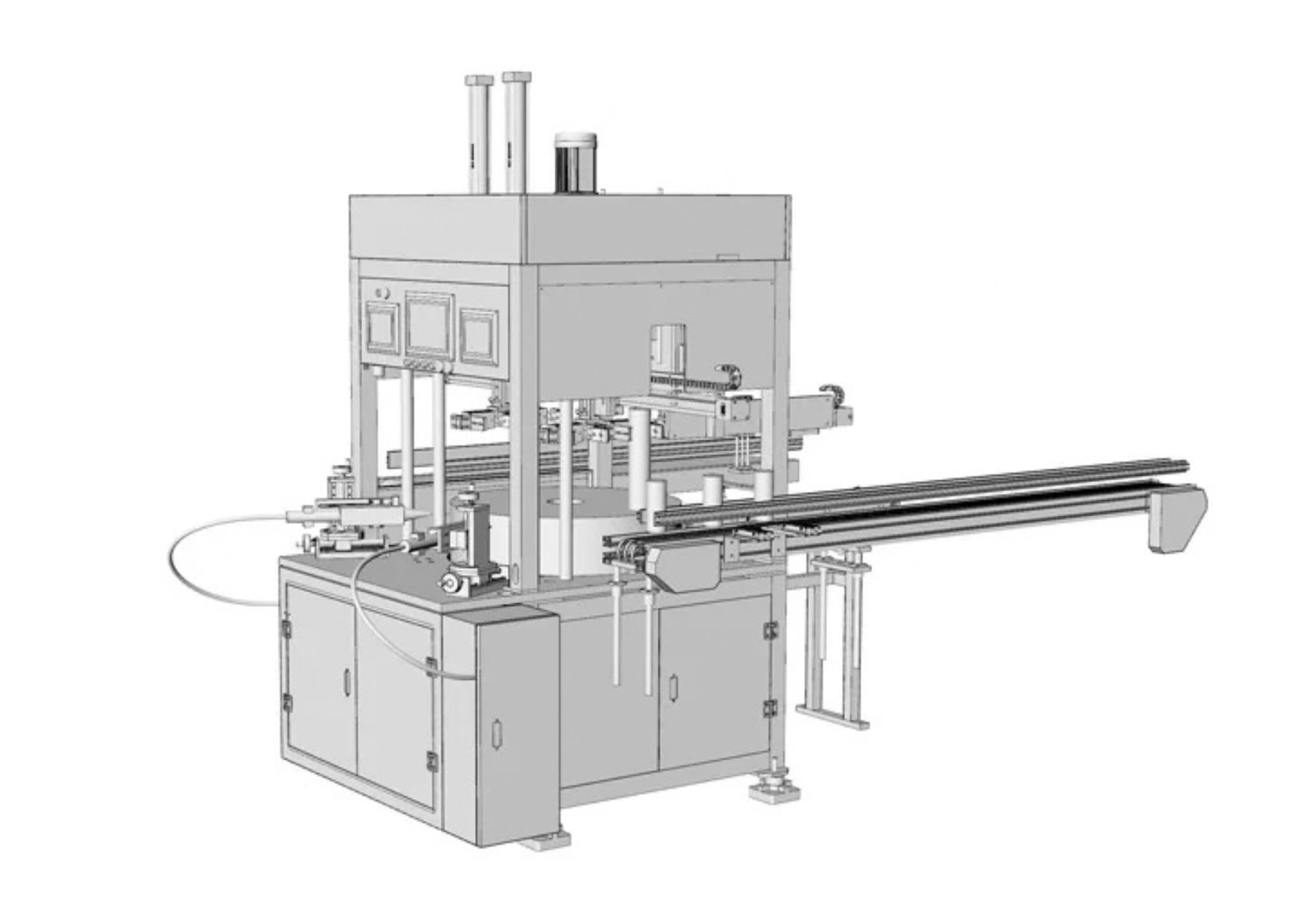
The original machine was built around a stainless-steel square-tube frame, with robots, conveyors, protective panels, the control cabinet and cable routes installed directly onto the structure. This configuration was practical for early-stage functional validation and on-site commissioning, but it created several visible problems.
First, the functional hierarchy was unclear. The upper robot working area, the central conveying area, and the lower structural and cable-routing areas visually overlapped, while the control cabinet and operating interface on the side appeared relatively independent. Each part worked, but the system did not read as one complete product.
Second, the machine had a strong assembled-engineering appearance. Structural profiles, connectors, cables and functional components were widely exposed, so the eye was drawn to individual parts rather than to the equipment as a whole. Customers could easily see what the machine was made of, but not necessarily the overall capability represented by the finished system.
More importantly, the identity of the complete-machine manufacturer was not sufficiently clear. The brands of internal components were relatively prominent, while the company responsible for system development, integration and final delivery had little visible presence in the product itself.
This is a common challenge in large industrial equipment: the technology is already inside the machine, but the product has not yet translated that technology into value that customers can clearly recognize and trust.


EQPID did not simply close off every exposed element. The machine was reorganized according to its requirements for operation, observation, protection and maintenance.
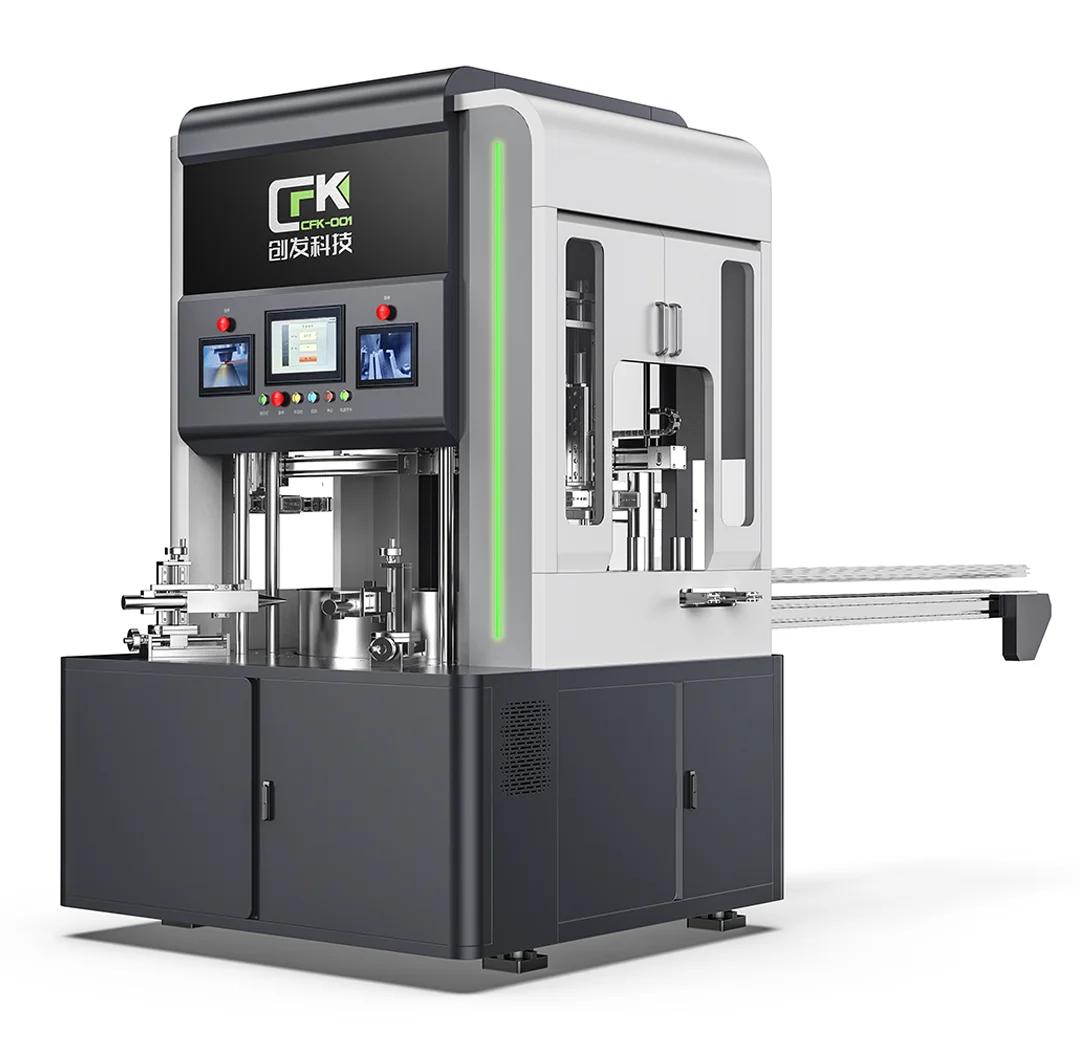
The upper section became a transparent robot working enclosure. The lower section became an integrated equipment compartment. The sides continued to support material infeed, outfeed and auxiliary functions, while the human-machine interface was positioned independently within the main operating area.
Through this reorganization, the robots, conveying mechanisms, control system and structural framework were brought into one coherent product architecture. The machine moved from being a frame that carried a collection of components to a complete equipment system that clearly organizes its functional modules.
The visible change is an exterior redesign, but the deeper result is a stronger sense of product integrity.
Large automated equipment cannot pursue a clean exterior at the expense of usability. The robot working area requires a clear safety boundary, while operators still need to observe the process and reach critical areas during setup, cleaning and maintenance.
Large transparent protection panels create a defined enclosure while preserving clear views of the robots and conveying process. Transparent and solid areas serve different purposes: sections that need to be observed remain visible, while components that require shielding and protection are integrated into the lower equipment compartment.
Door seams and long handles make access points easy to identify. The lower enclosure is divided according to the internal structure, with maintenance panels, ventilation and functional interfaces retained where needed so that visual continuity does not create new service obstacles.
The HMI is positioned on the primary operating side with an independent support that gives it an appropriate relationship to the main body. Compared with the original, more dispersed and lower operating arrangement, the new position is easier to identify and allows operators to monitor the equipment while viewing parameters and controlling the system.
Green status light strips are arranged around the front, rear, left and right sides of the machine. Operators can see the working status from different positions without returning to one fixed operating face. The lighting therefore functions as an information interface as well as part of the visual composition.
The redesign does not change the core operating principle of the equipment. Instead, it makes the relationships between observation, operation, protection, maintenance and status recognition clearer and easier to understand.
The redesigned machine establishes a clear two-level composition. The transparent upper working enclosure feels lighter and allows the motion of the parallel robots to remain visible, while the solid lower equipment compartment provides a stable visual base.
The upper brand area, the horizontal division through the middle of the machine and the lower support structure create a strong horizontal order, helping a relatively large piece of equipment maintain clear proportions and a coherent silhouette.
Instead of relying on excessive decorative styling, the design uses rounded contours, continuous transitions and consistent panel divisions to soften the rigidity of the original frame. The same corner language continues across the top, sides and lower body so that the machine maintains a consistent identity from different viewing angles.
The exterior panels use brushed stainless steel and retain the natural material finish. Compared with large painted surfaces, brushed stainless steel expresses cleanliness, durability and industrial quality while also responding to practical requirements for maintenance and surface performance. A consistent brushing direction helps control reflections and gives the equipment a restrained, professional and reliable appearance.
The green lines running around the machine are not decorative graphics. They are functional status lights integrated into the overall horizontal composition. When illuminated, they strengthen the sense of operation and continuity; when the machine is stopped, the stainless-steel surfaces and transparent enclosure still maintain a clean and stable visual relationship.
The objective was not to make the equipment look more decorative, but to use authentic materials, clear order and functional details to create a product image that better reflects the machine’s real technical capability.
Industrial design for large equipment cannot be separated from structure and manufacturing. The redesign therefore retained the existing machine frame, robot working envelope, conveying relationships and control-system constraints, and concentrated the upgrade on modular stainless-steel sheet-metal panels, transparent safety panels and selected rounded structural elements.
Most exterior parts use clear and practical bending relationships, while more complex forms are concentrated in the top and corner areas where they have the greatest influence on perceived quality.
Brushed stainless steel is both a visual decision and a manufacturing requirement. The brushing direction, panel division, bending direction and seam control need to be coordinated, while welding, assembly and transportation must minimize scratching, deformation and inconsistent grain orientation. Only when material selection, structural design and fabrication are aligned can the natural stainless-steel finish become a stable expression of quality.
The status lighting also has to be coordinated with sheet-metal structure, installation space, cable routing and future maintenance. It needs to remain continuous and clearly visible without becoming an obstacle during assembly or servicing.
Segmented doors, ventilation zones, installation interfaces and equipment feet continue to follow real assembly and maintenance requirements, leaving the necessary conditions for production, transportation, on-site installation and later service.
Good manufacturability is not about making the design simplistic. It is about finding the right balance between quality, process capability, cost and delivery so that the design shown in the concept can be translated reliably into a real machine.
The most important difference between the original and redesigned machine is not simply that the exterior looks better. The level of product completion has changed.
Before the redesign, customers first saw a frame, robots, conveyors and a control cabinet. After the redesign, they first see a complete automated system developed and delivered by the equipment manufacturer. Technical integration, manufacturing quality and engineering-delivery capability that were previously hidden inside the machine are expressed through a clearer and more coherent product order.
The natural stainless-steel finish communicates material authenticity and durability, while the four-direction status lighting turns machine operation into information that can be understood at a glance. Neither the material nor the lighting is treated as decoration; both support usability, manufacturing quality and product identity.
This transformation also affects how the equipment performs in customer visits, project presentations, exhibitions, sales communication and final acceptance. When the product image is consistent with the company’s real capability, the machine becomes more than a tool for completing a production task. It also becomes a carrier of brand recognition and customer confidence.
The value of the redesign was not to add another shell around the equipment, but to turn a mature technical system into a complete, credible and clearly identifiable industrial product through product order, material quality and visible status interaction.