
PART I · BRAND-ORIENTED DESIGN
EQPID Methodology — Part I: Preface
Why design creates business value
How equipment connects real technical and organizational capabilities with customer perception, trust, and long-term brand value.

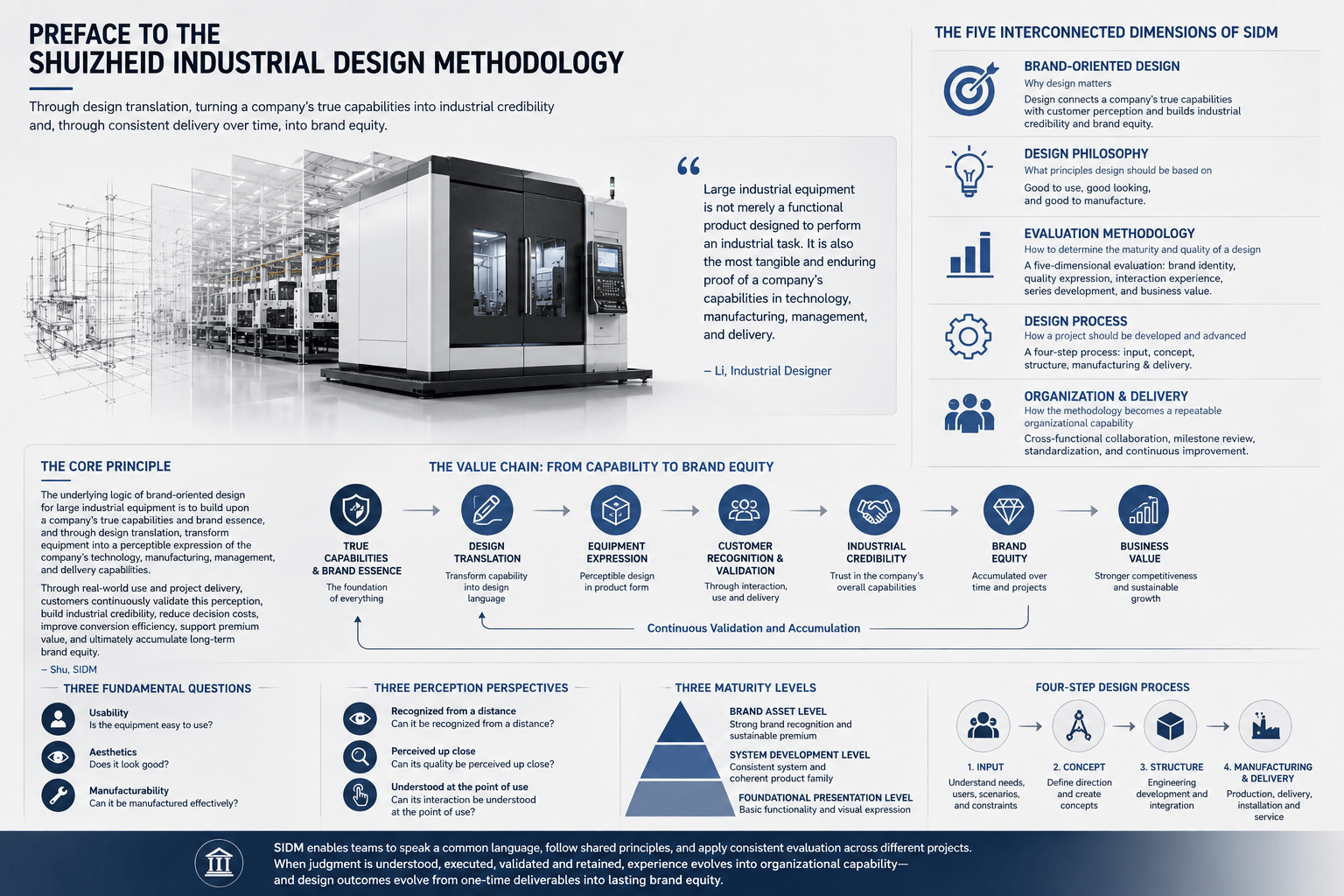
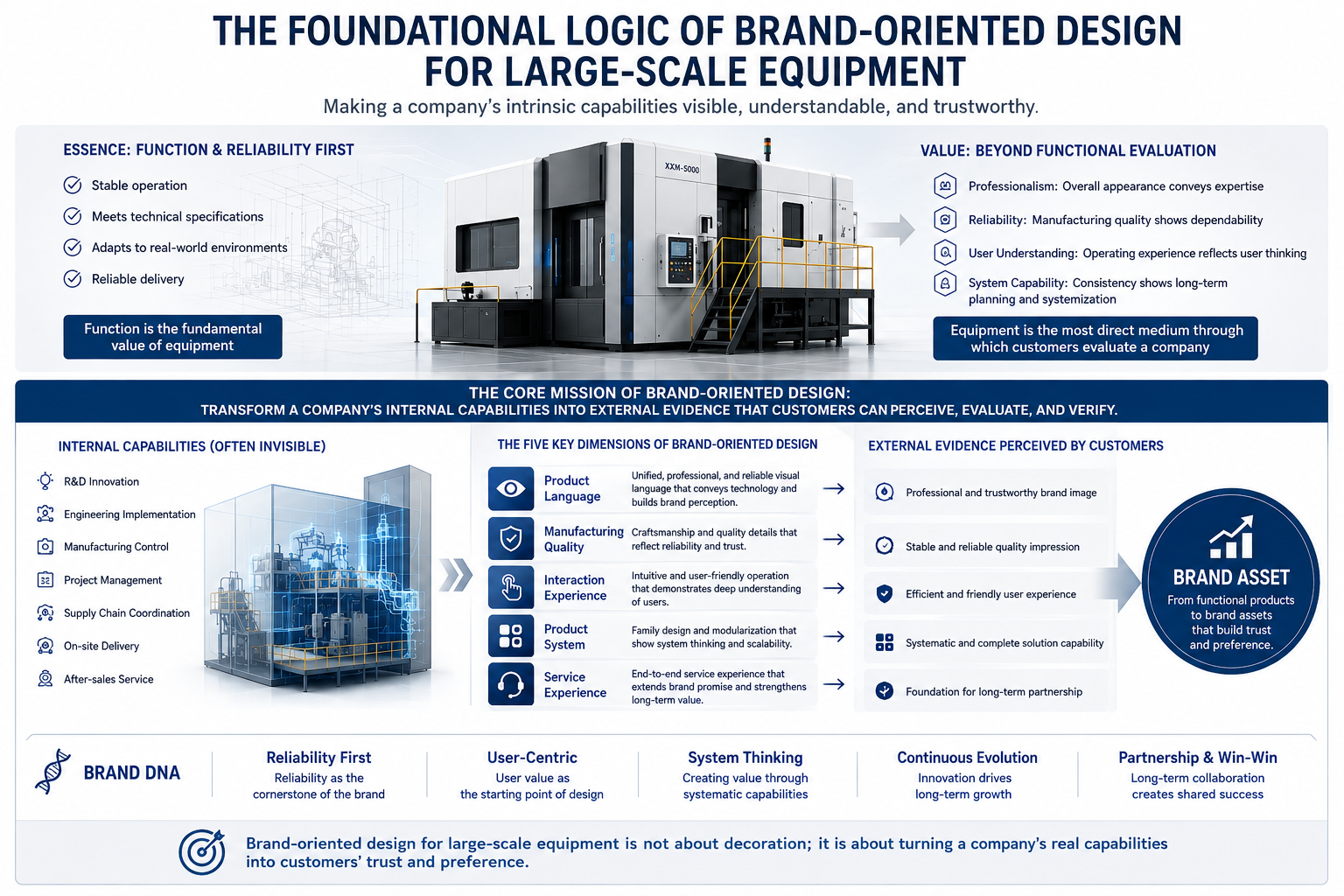
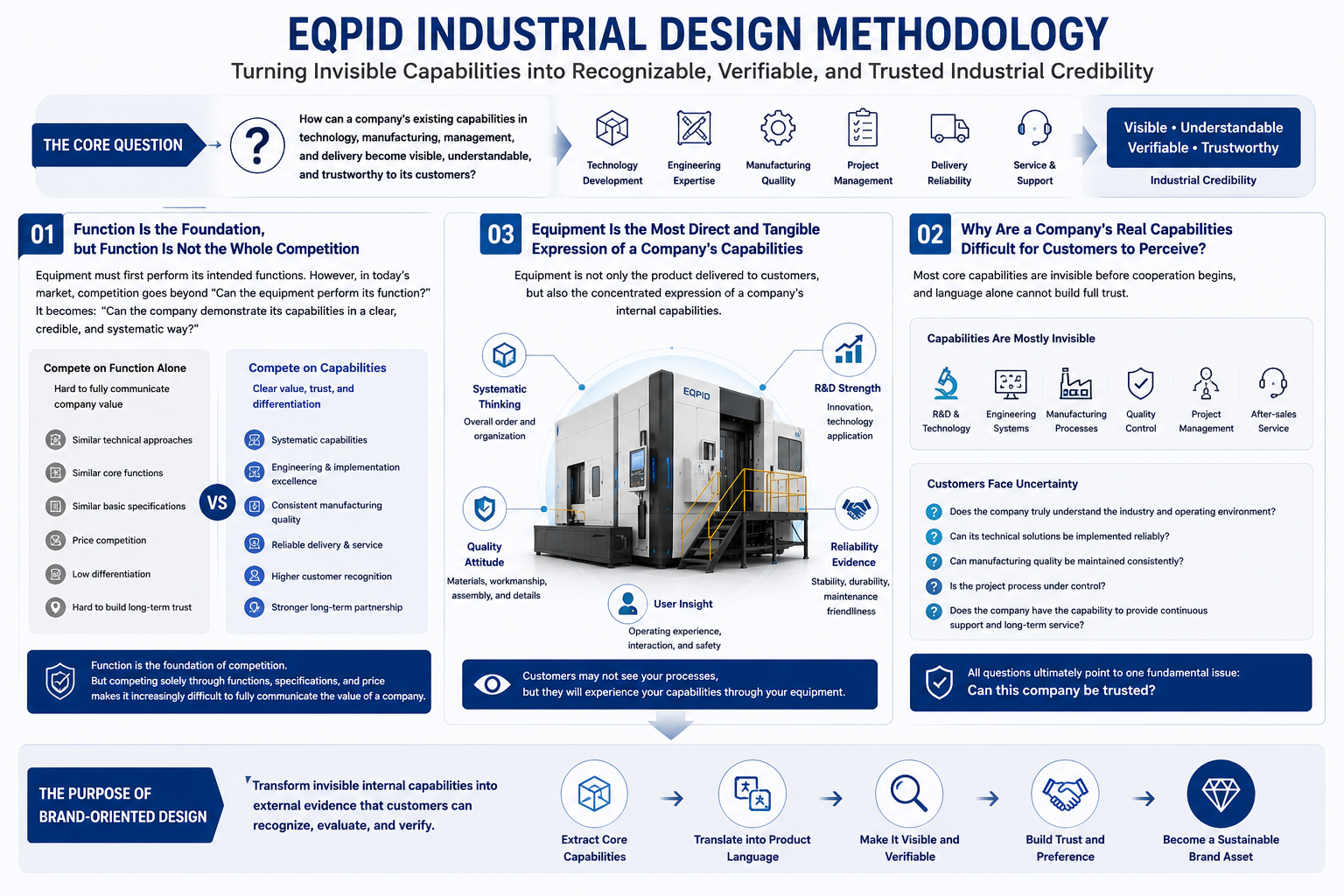
Large-scale equipment is, first and foremost, a functional product designed to perform industrial tasks such as production, processing, inspection, assembly, transportation, and energy conversion. Whether the equipment can operate stably, meet its technical specifications, adapt to real-world environments, and achieve reliable delivery is always the foundation of its value and existence. Brand-oriented design for large-scale equipment cannot replace technology, functionality, or manufacturing, nor can external styling be used to conceal problems within the product itself.
However, large-scale equipment is more than a collection of technical specifications, functional modules, and structural components.
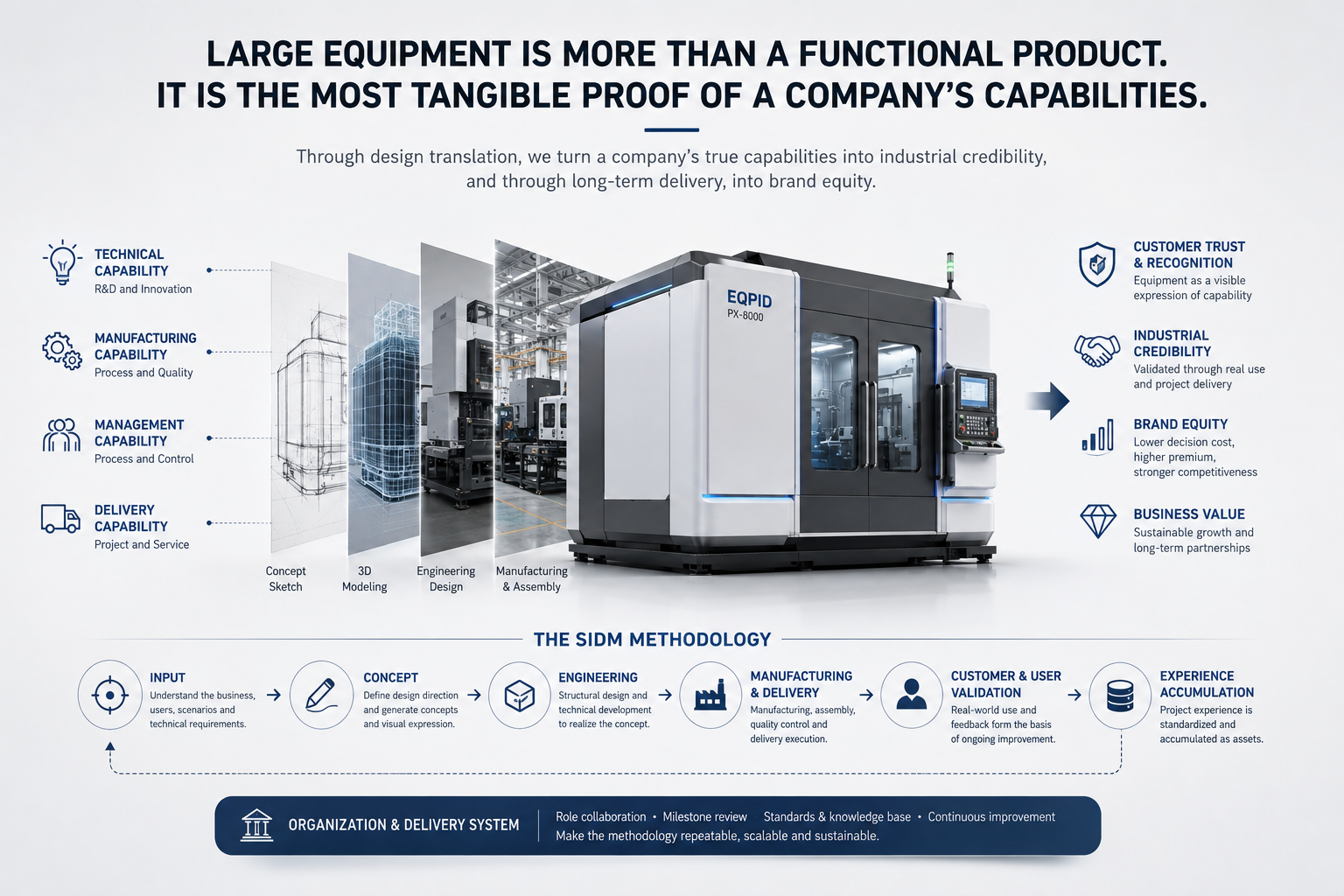
During the process of engaging with a company, understanding its solutions, evaluating suppliers, and making purchasing decisions, the equipment itself is often the most direct, tangible, and persuasive object of evaluation. Customers may judge whether a company is professional through the overall appearance of its equipment, whether it is reliable through its manufacturing quality, whether it truly understands users through the operating experience, and whether it possesses long-term planning and systematic capabilities through the consistency and relationships among different products.
Large-scale equipment companies typically possess complex and substantial internal capabilities, including R&D, engineering implementation, manufacturing control, project management, supply-chain coordination, on-site delivery, and after-sales service. Yet most of these capabilities remain hidden within the organization. Before formal cooperation begins, customers have limited opportunities to fully understand them, and they cannot accurately assess them based solely on corporate introductions, technical documentation, or sales presentations.
This is precisely the problem that brand-oriented design seeks to address: how to make a company's intrinsic capabilities visible, understandable, and trustworthy to its customers.
It is not simply about making equipment more eye-catching, nor is it about adding more brand colors, decorative lines, or visual symbols. Instead, through product language, manufacturing quality, interaction experience, and product systems, it transforms the company's underlying capabilities—many of which are difficult to perceive directly—into external evidence that customers can recognize, evaluate, and verify.
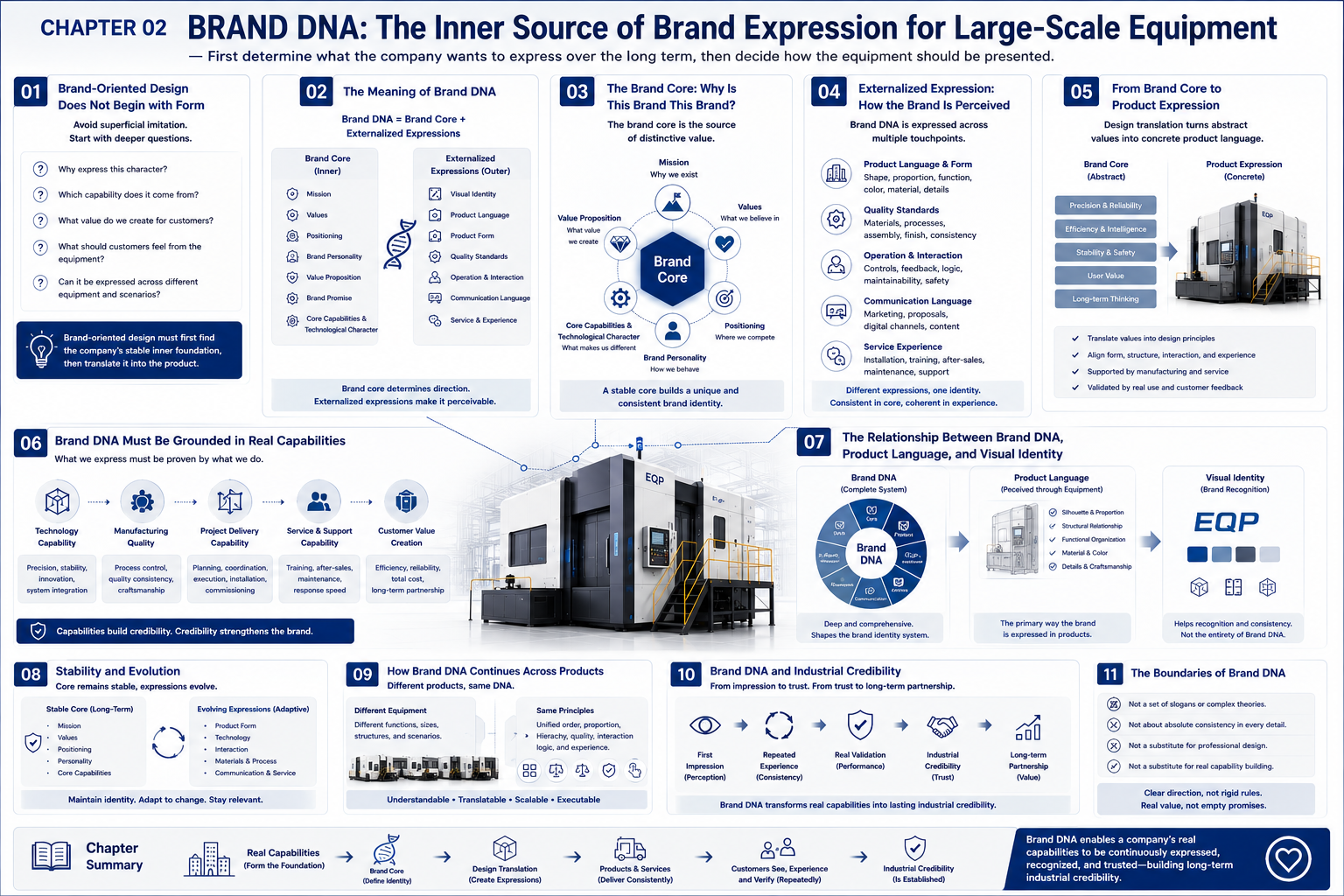
This part explores the underlying logic of brand-oriented design for large-scale equipment, brand DNA, five key dimensions, and the mechanisms through which brand assets are formed. It establishes a fundamental theoretical framework for understanding how large-scale equipment can evolve from a functional product into a brand asset.
KEEP READING