CASE STUDY
EQPID transformed a precision custom automation machine from an exposed engineering frame into a more integrated industrial product by reorganizing its enclosure, viewing areas, operator interface and CMF.
This project focused on the industrial design and productization of a precision custom automation machine. The original configuration was built around an exposed structural frame, transparent guarding and an externally mounted control terminal. While the engineering logic was clearly visible, the overall appearance still reflected a strongly engineering-driven machine configuration.
EQPID reorganized the exterior form, functional zones, operator interface, viewing areas and CMF system while preserving the machine’s core internal layout and observation requirements. The design transformed the equipment from an engineering-oriented assembly into a more integrated, professional and productized industrial machine.
The equipment incorporates enclosed guarding, internal motion systems, operator controls and multiple viewing requirements.
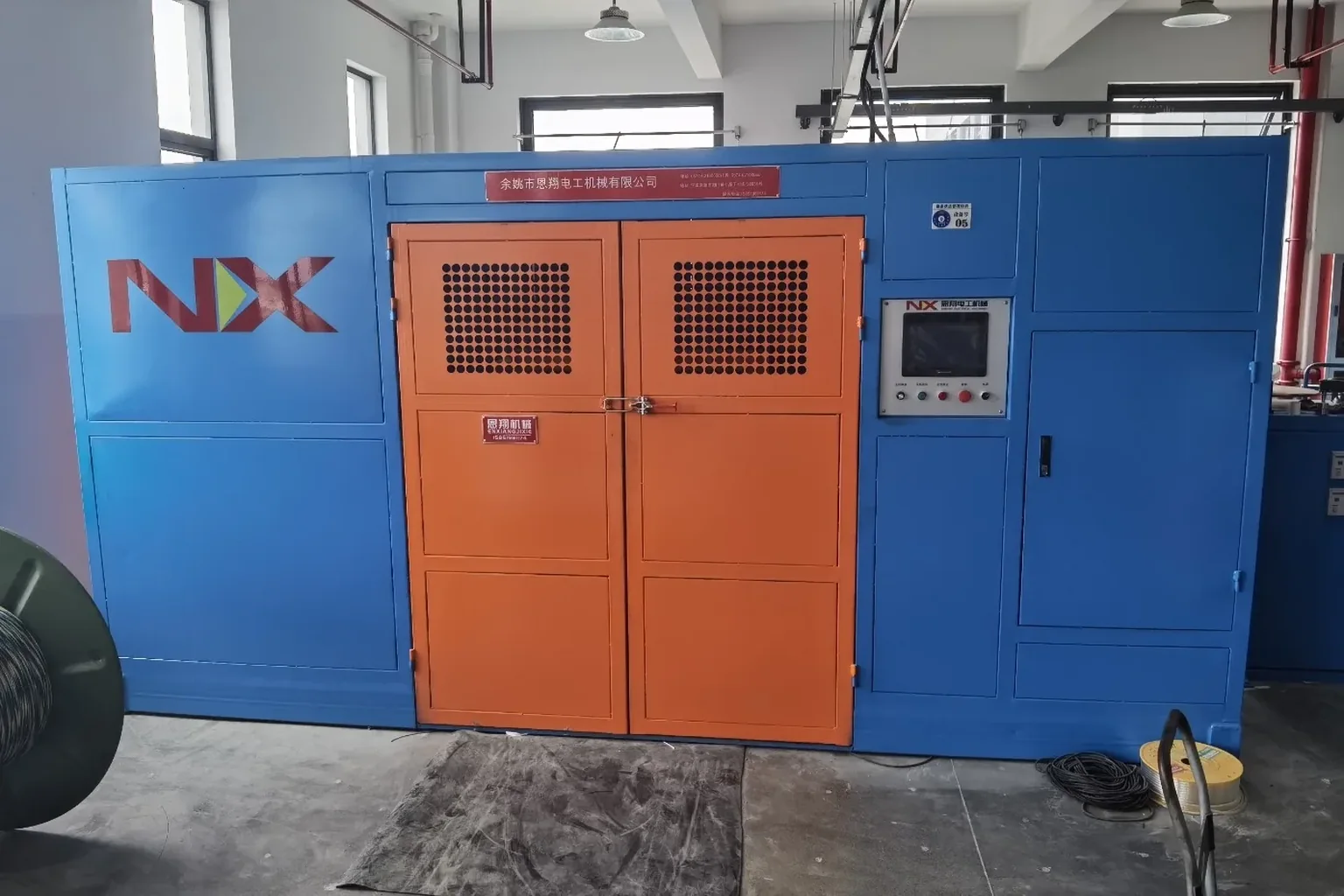
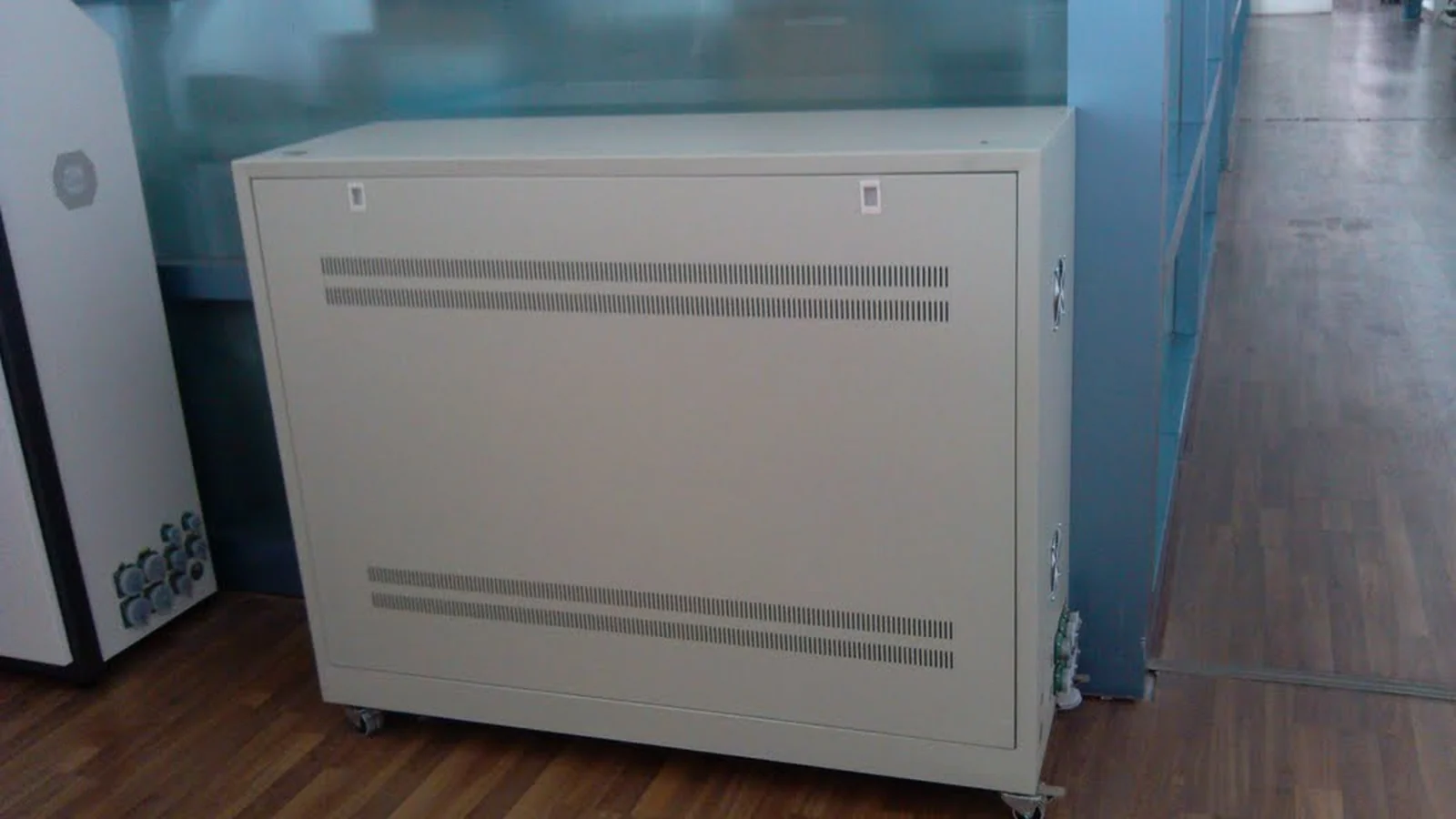
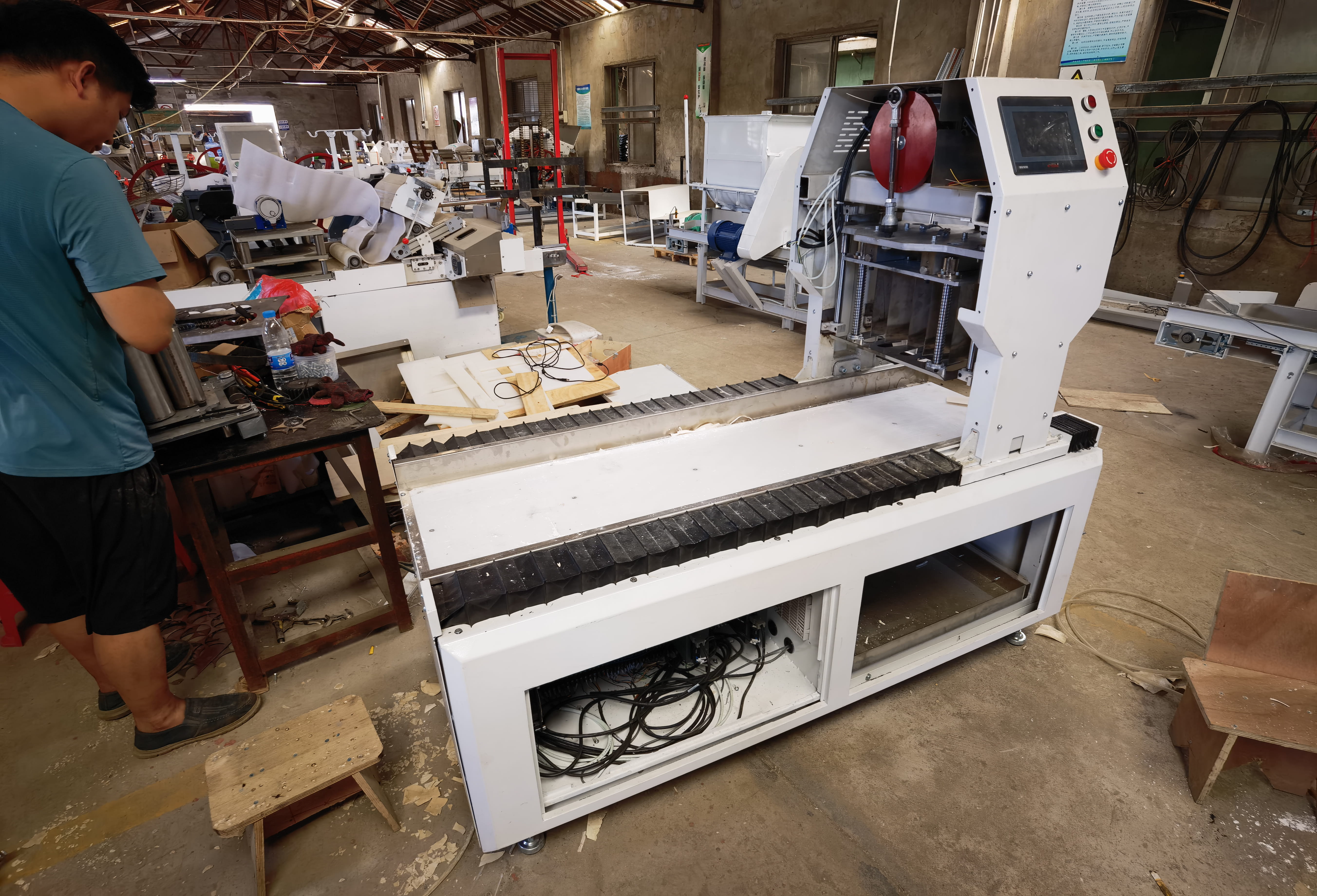
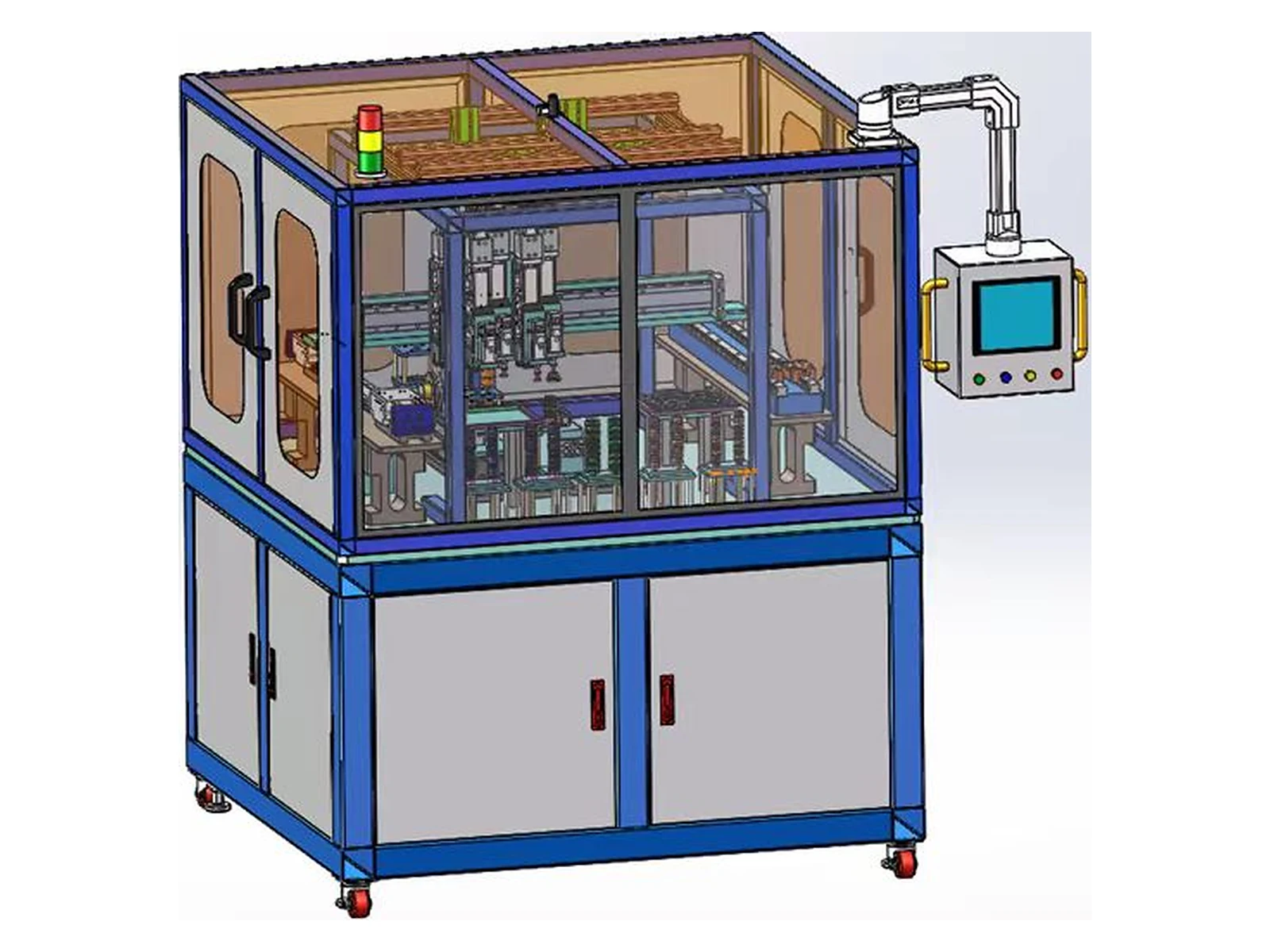
The original machine used blue structural profiles as its primary frame, transparent panels for guarding, a separate lower cabinet and a side-mounted control terminal. This configuration supported rapid engineering integration, but the frame, doors, cabinet, controls and internal mechanisms appeared visually fragmented, limiting the sense of a complete industrial product.
The design objective was not to redefine the machine’s core process technology, but to reorganize its exterior around the existing engineering conditions so that function, operation, protection, visibility and product expression could work as a more coherent system.
The main challenge was to create a productized exterior around an already established and mechanically complex internal system.
In the original configuration, much of the structural framework remained visually exposed, making the profile frame a dominant part of the machine’s appearance. The transparent guarding, lower cabinet and external control unit read as separate components rather than parts of one integrated product.
At the same time, the internal mechanisms required substantial visibility so operators could observe machine status and operation. The design therefore could not simply conceal the machine behind a fully closed enclosure.
A further challenge was balancing operation, protection and maintenance. The exterior needed to become more complete and visually coherent without compromising door access, internal visibility, operator controls or necessary maintenance access.
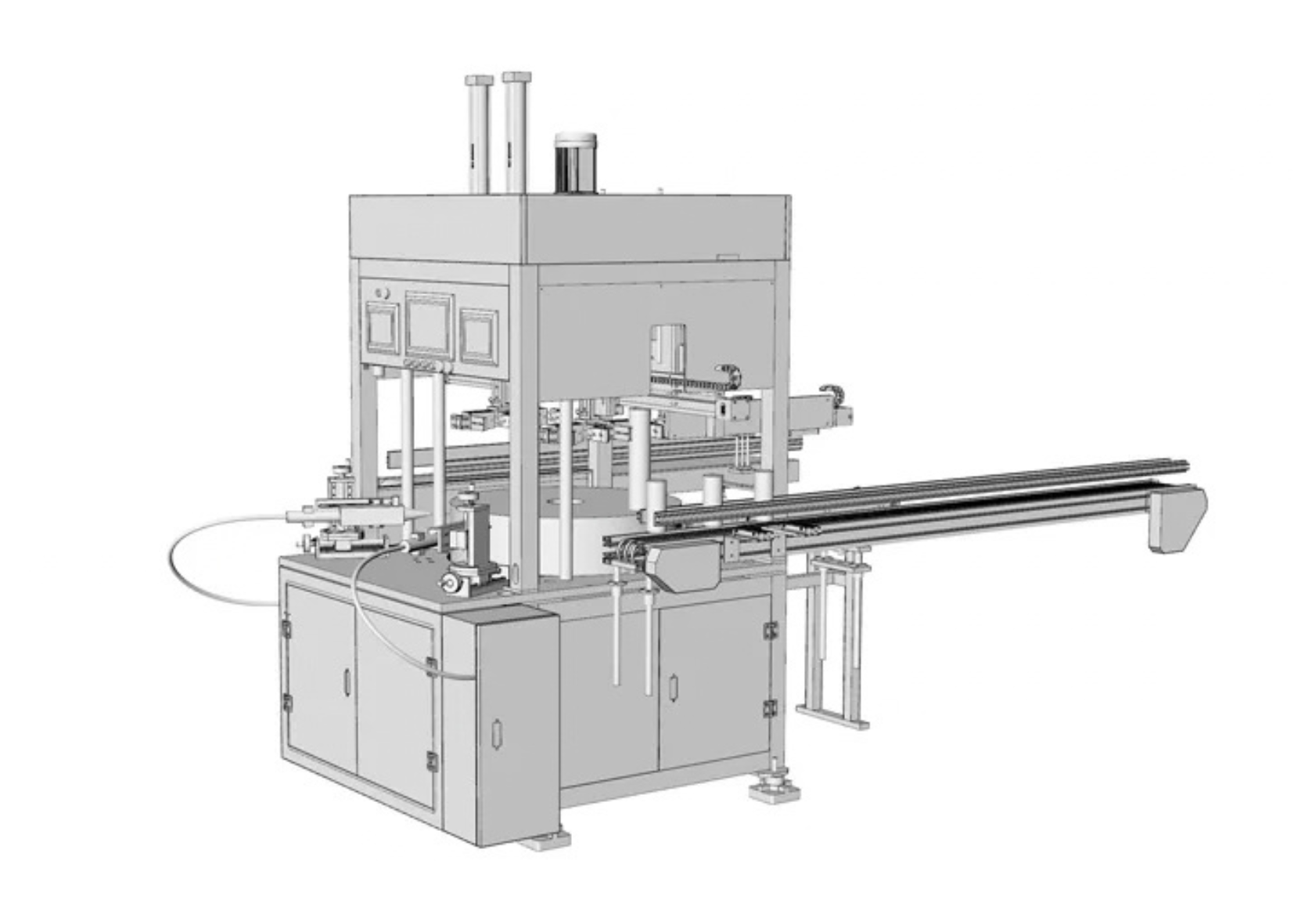
The original machine was primarily defined by its structural profile frame, with much of the internal system remaining visually exposed. Transparent guarding, the lower cabinet and the external control terminal each served their functions, but there was no strong unified product boundary.
The visual emphasis remained on the engineering structure itself, resulting in the typical appearance of a custom-built automation machine.
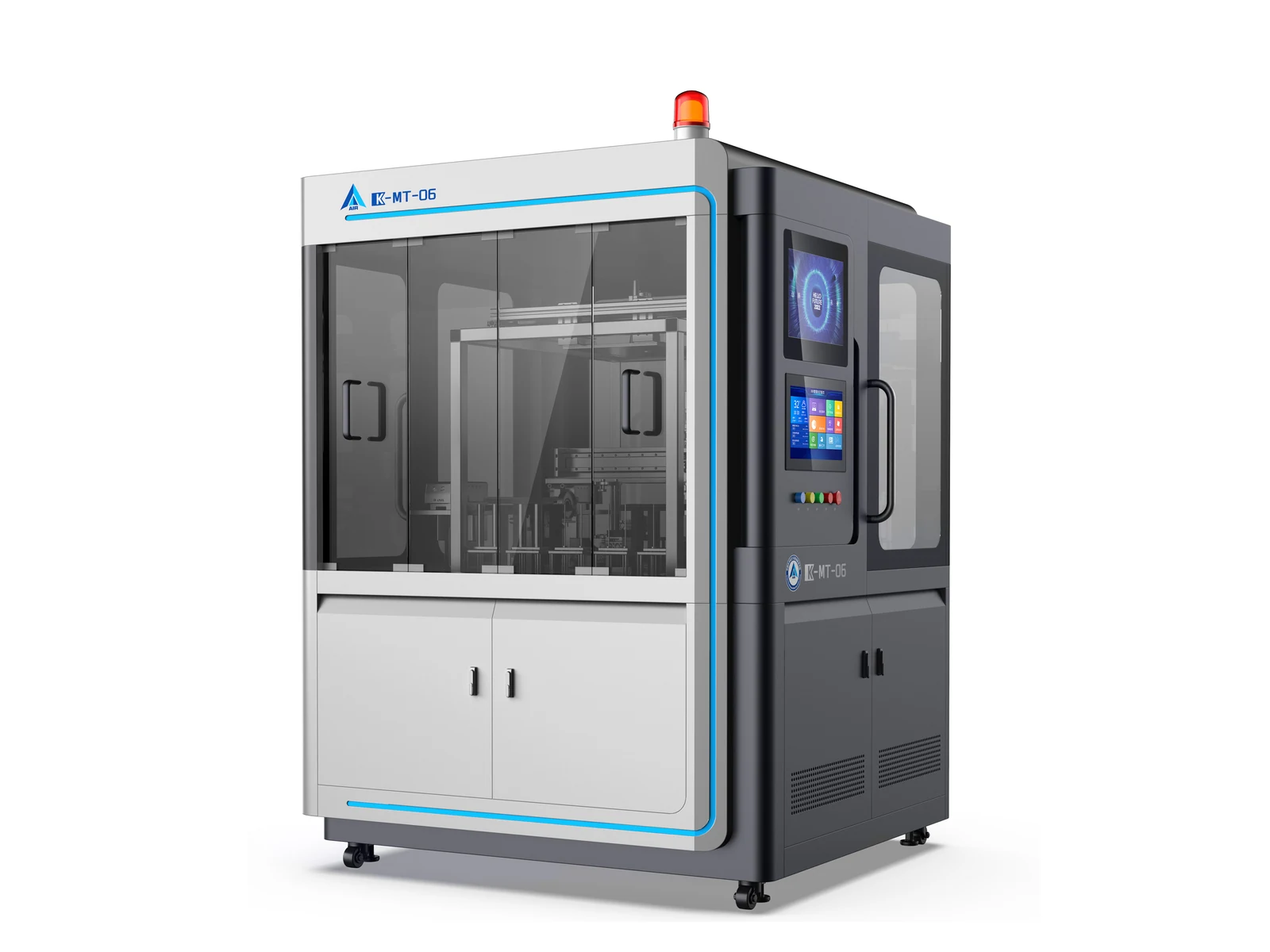
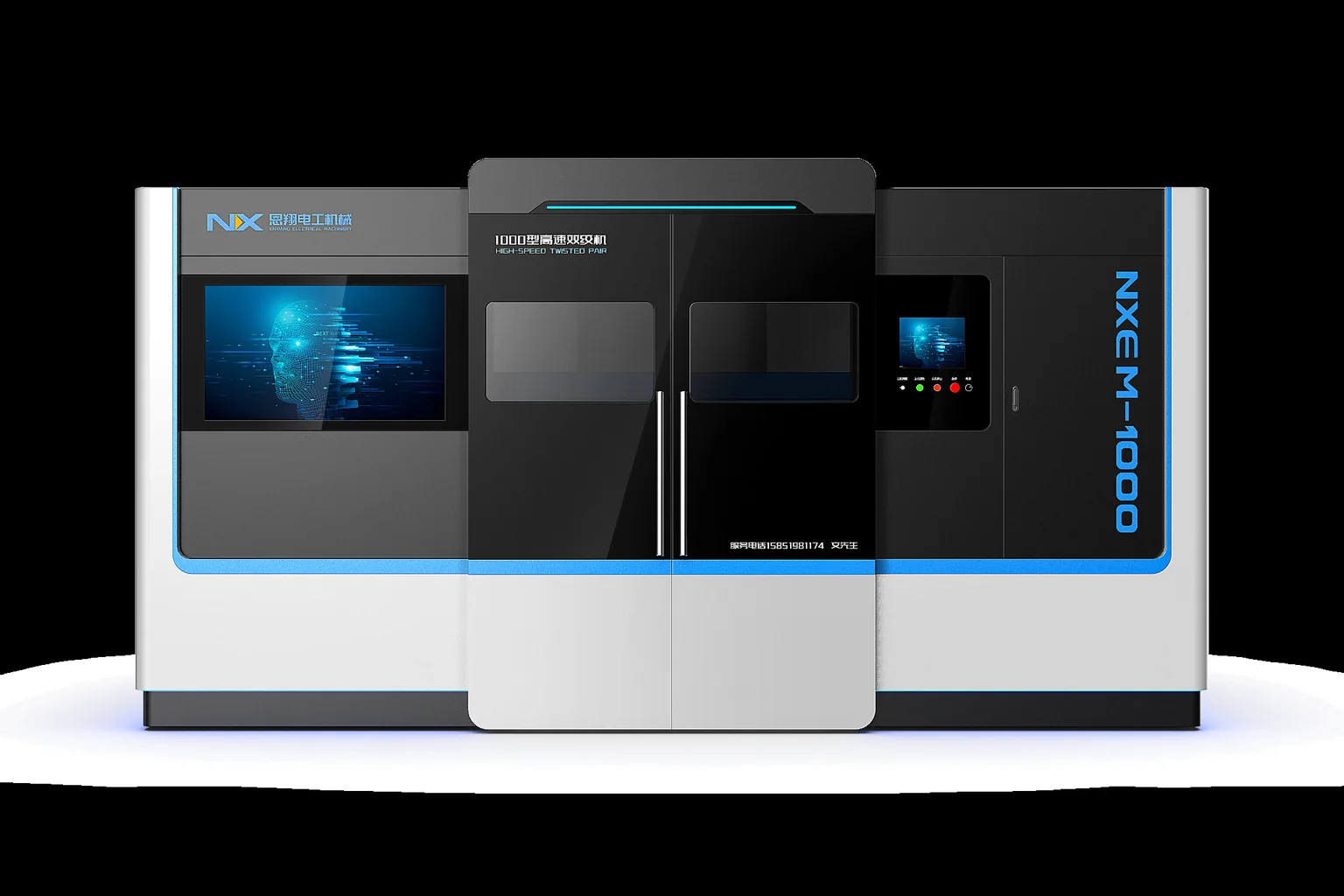
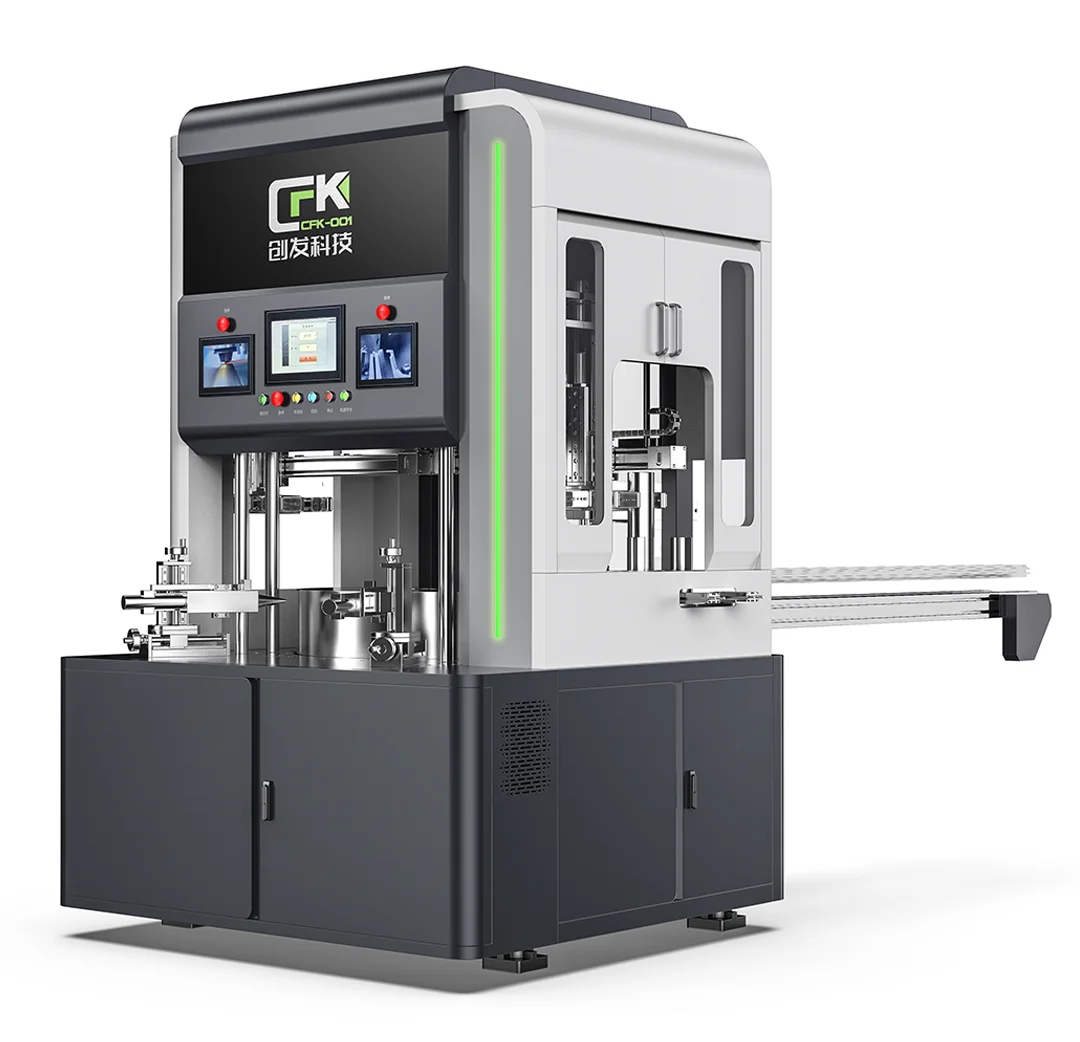
The design strategy began by redefining the overall product boundary, bringing the previously separate frame, guarding, controls and lower cabinet into a unified enclosure architecture.
Large dark-framed viewing windows became the dominant visual feature of the upper section. They retained visibility of the internal mechanisms while reducing the visual interference created by the machine’s mechanical complexity.
The operator interface was moved from an externally mounted side unit into a dedicated front-side control zone. Displays, controls, physical buttons and machine identification were organized within one clear area, improving both visual hierarchy and operational legibility.
The lower cabinet was treated as a more continuous and restrained sheet-metal volume, creating a clear relationship between the solid lower section and the transparent upper working zone. Blue accent lines were used selectively to reinforce a precise and technical character without relying on excessive decorative features.
The overall form was based on relatively clean sheet-metal surfaces, controlled parting lines and regular window geometry, helping the design maintain a strong product identity while remaining compatible with typical industrial fabrication logic.
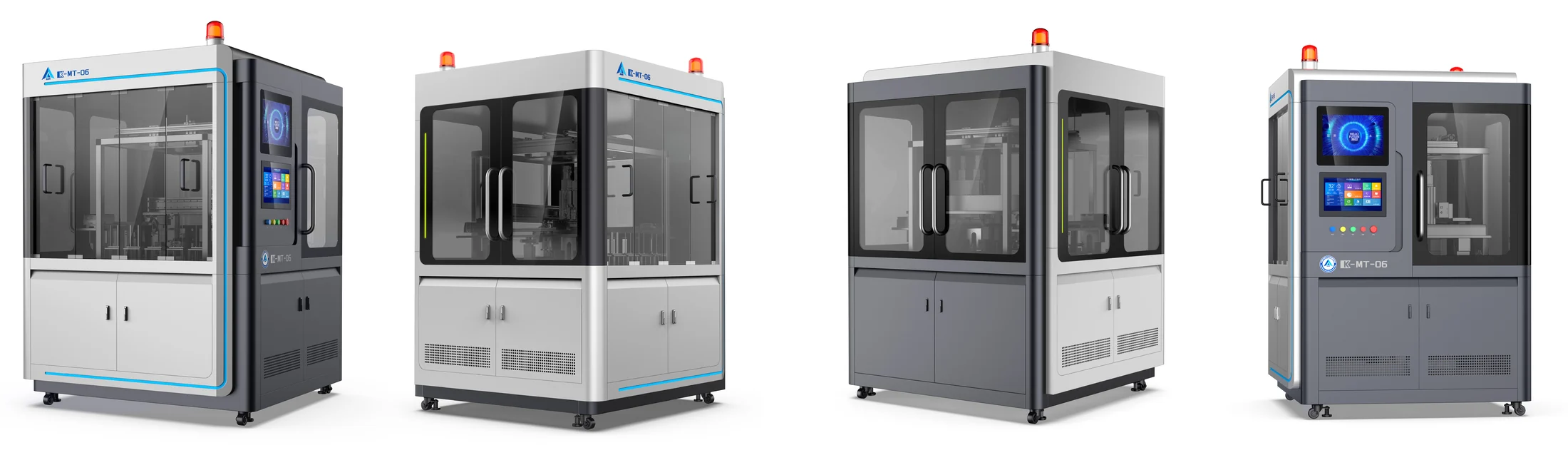
Good to Use. Large viewing areas were retained to support observation of the internal working process, while the control zone was reorganized to establish a clearer relationship between the operator interface and the machine itself. Doors, handles and viewing windows were treated as part of the functional architecture rather than as secondary additions.
Good to Look At. By unifying the overall silhouette, reducing the visual dominance of exposed framing, establishing clear upper and lower zones and controlling the CMF relationship, the machine evolved from a collection of engineering components into a more coherent product. Dark viewing areas contrast with the light body, while restrained blue accents reinforce its technical character.
Good to Manufacture. Rather than relying on extensive complex surfacing, the exterior was developed through planar sheet-metal surfaces, bends, framed windows, access doors and controlled parting lines. This approach was intended to balance product expression with realistic industrial fabrication conditions.
The available project material primarily documents the design stage, so manufacturing intent can be described, but final production validation should not be claimed without further evidence.
In the redesigned proposal, the frame and internal mechanisms were integrated into a more complete enclosure system. Viewing areas, operator controls, machine identification, lower cabinets and access doors were reorganized into a clearer hierarchy.
Internal visibility was maintained, but the visual experience shifted from seeing the engineering structure first to perceiving a complete industrial product first.
The final design proposal established a more coherent exterior system for the machine.
Previously separated elements—including the structural frame, protective enclosure, operator terminal and lower cabinet—were reorganized into a clearer overall form, more distinct functional zones and a more consistent CMF language.
The resulting design retained the functional character of a precision automation machine while presenting a more professional, integrated and productized industrial identity.
Based on the currently available material, the verified outcome is the design-stage productization improvement. Manufacturing quality and final implementation should only be added if production or on-site photographs become available.