CASE STUDY
For a machine-tool loading and unloading application, EQPID reorganized the gantry beam, Z-axis module, material handling area, and machine body into a more integrated automation product with clearer hierarchy and stronger visual identity.
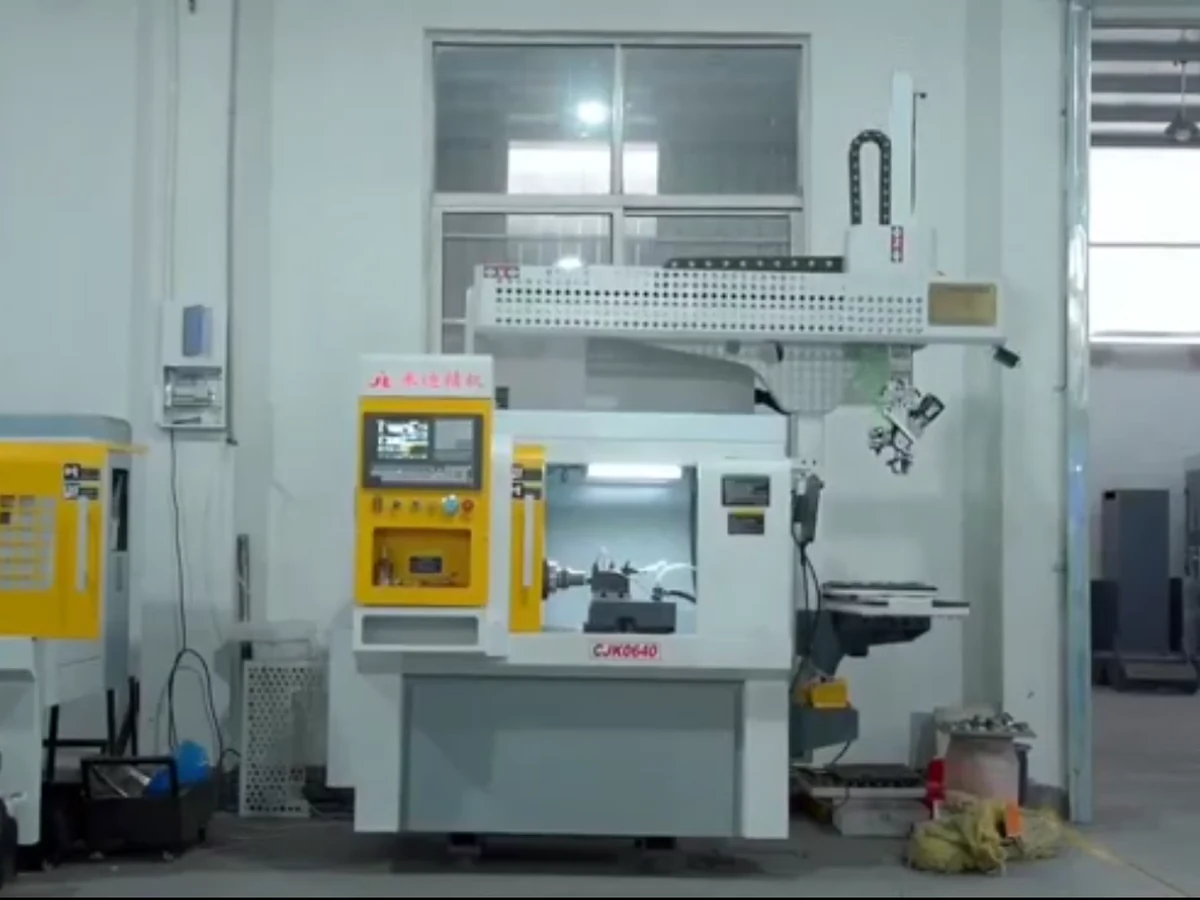
The project centers on a gantry loading and unloading robot integrated with a machine tool. The original equipment had already established its basic engineering configuration: a horizontal motion module spanning the machine, a vertical handling mechanism entering the working area, and a dedicated material loading zone at the side. The functional relationships were visible, but each module still read as a largely independent engineering component.
EQPID’s task was not to redefine the core automation principle. The design focused on reorganizing the relationship between the robot, machine body, material area, and sheet-metal enclosure so the system could move from an engineering assembly toward a more complete industrial product architecture.
The upper gantry beam was the strongest visual element of the original system, yet the beam, cable chain, vertical actuator, machine body, and material unit lacked a unified product language. Engineering components occupied the visual center, perforated guards and motion structures were treated separately, and the yellow-and-gray machine interface created a clear break from the robot structure above it.
The redesign therefore had to establish a coherent overall image without interfering with loading paths or the machining opening, create a clear hierarchy between the X/Z motion system and material zone, and build product identity through forms that could be realistically supported by sheet-metal fabrication.
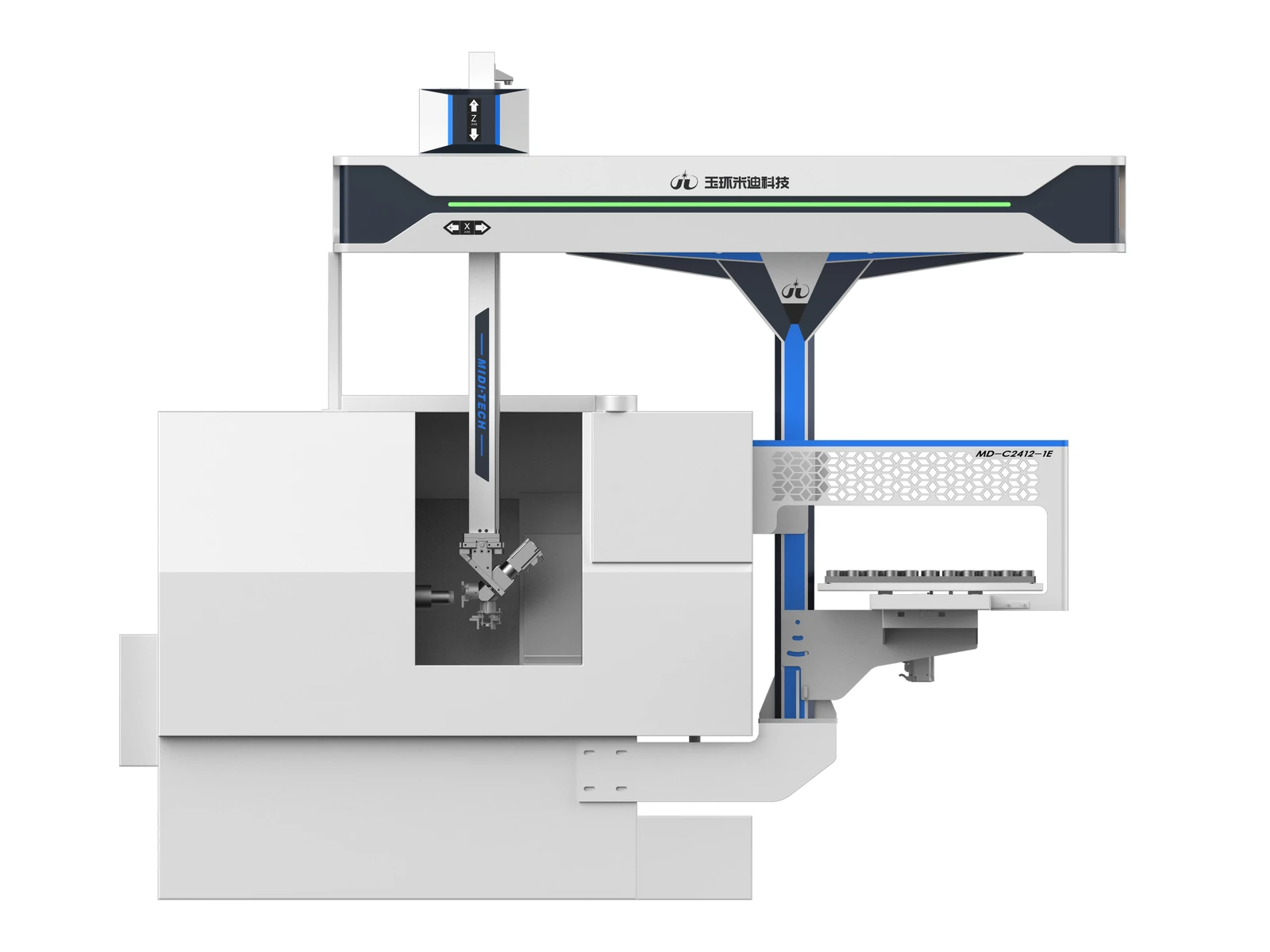
The redesign begins by treating the upper gantry beam as the primary visual axis of the entire system. A cleaner enclosed horizontal volume, dark end sections, and a continuous status-light line give the robot a stronger silhouette and a more deliberate long-span expression.
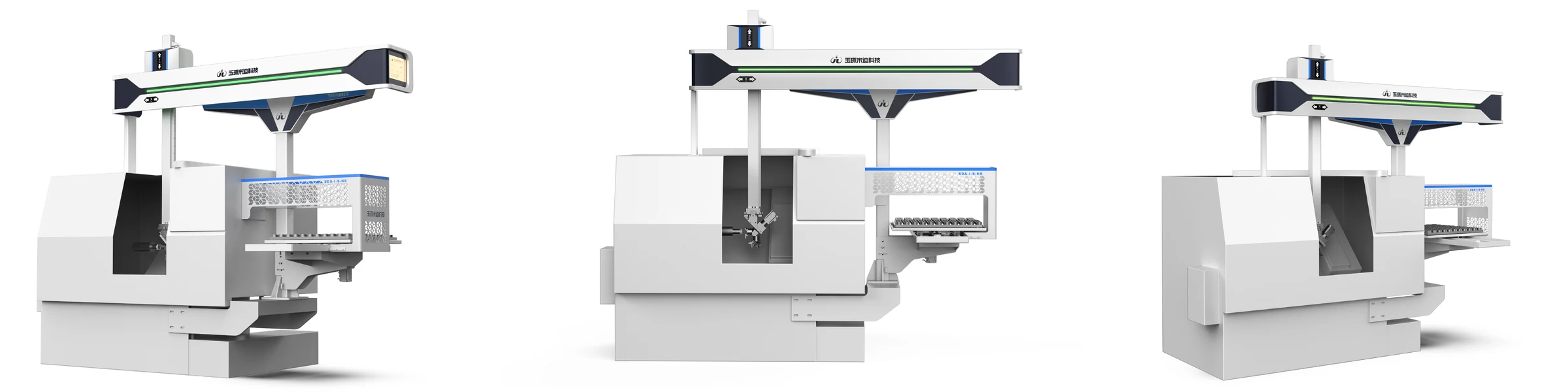
The vertical motion structure is integrated into the same language. The Z-axis receives a clearer enclosure and blue identity strip, while X and Z direction markings make the motion logic easier to read. A tapered V-shaped transition visually connects the beam to the central vertical structure, transforming a series of engineering connections into a continuous product feature.
The material handling area is no longer treated as a separate attachment. Its enclosure, perforated panel, and supporting structure follow the same form and CMF logic as the gantry system. White primary surfaces, dark graphite structural zones, blue accents, and a green status line establish a controlled hierarchy from overall silhouette to functional detail.
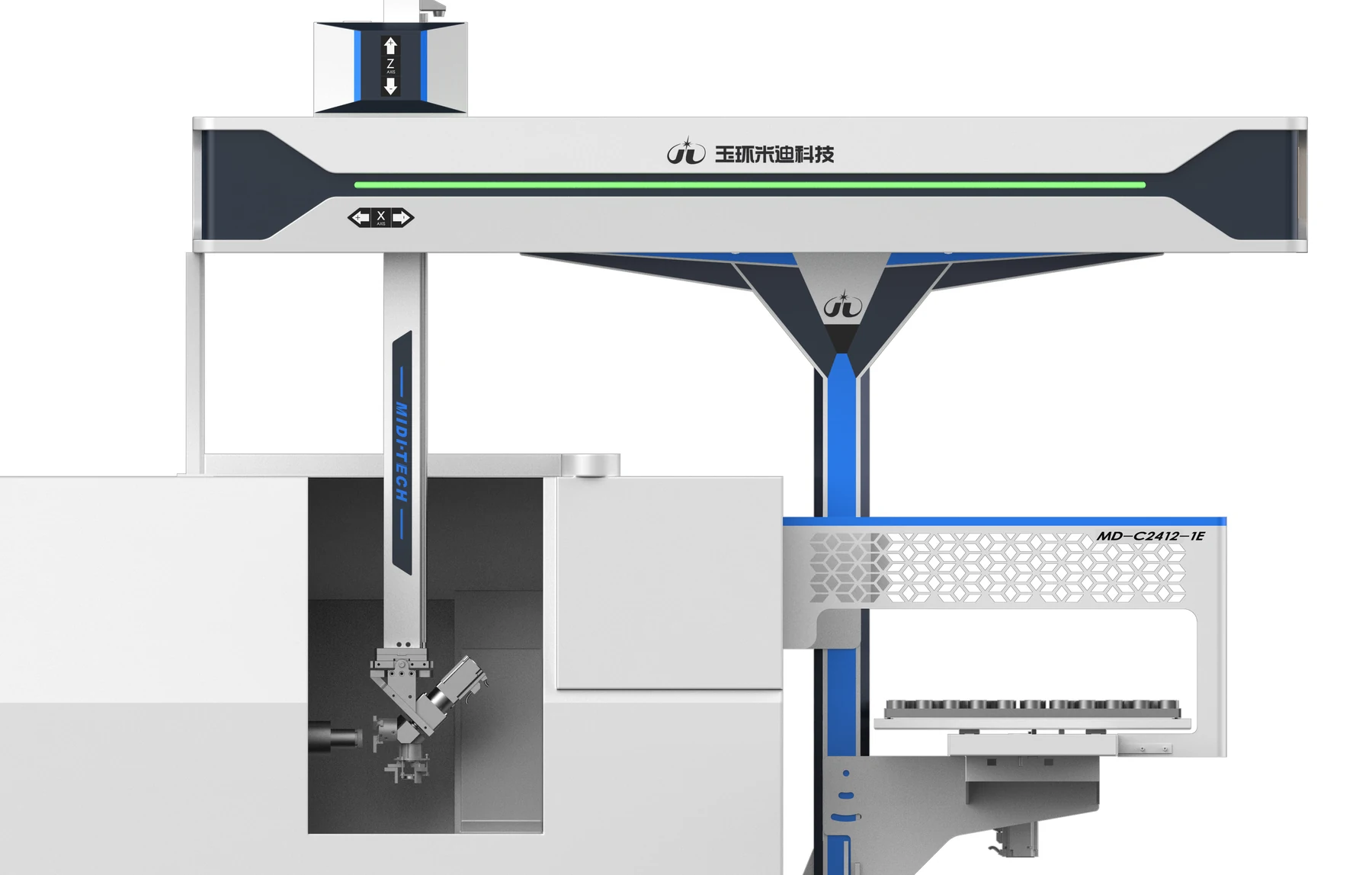
The visual language is intentionally compatible with conventional fabrication. Large planar sheet-metal surfaces, crisp bends, and a limited number of high-value design features reduce unnecessary complexity while preserving a recognizable product character.
Clearer functional relationships make the horizontal and vertical motion directions easier to identify, while the relationship between the robot, machining area, and material zone becomes more legible.
Product order is established rather than added as decoration. The long gantry beam becomes the primary feature for distance recognition, while dark-and-light massing, the blue identity strip, status lighting, and perforated detail create a controlled hierarchy at closer range.
The main design language relies on planar sheet metal, bends, controlled part divisions, and surface treatment instead of complex geometry, allowing the key visual features to remain compatible with realistic fabrication methods.
Good to Use · Good to Look At · Good to Manufacture
From the SIDM perspective, the value of the redesign lies in design translation: fragmented engineering relationships are reorganized into a product language that is easier to recognize, understand, and extend.
Before the redesign, the functional system was already present, but the gantry beam, motion modules, machine body, and material unit were primarily expressed through their individual engineering logic. Visible structures, perforations, cable routing, and unrelated color zones weakened the sense of a single product.
After the redesign, the horizontal beam, vertical axis, machine body, and material zone operate as one visual system. The gantry beam becomes the dominant product face, the blue vertical axis creates a clear secondary identity, graphite and white organize the major volumes, and the green status line adds a precise automation cue.
The final design proposal establishes a clear architecture built around a horizontal gantry beam, vertical motion axis, and integrated material handling zone. The loading and unloading robot is no longer perceived as an add-on above the machine; it becomes a defining part of the overall equipment identity.
The proposal strengthens visual integration, functional order, and product recognition while preserving the machining opening, robot movement, and material handling relationships. By building the appearance around repeatable sheet-metal geometry, CMF rules, and a controlled set of details, the design also provides a stronger foundation for extending the same language to future automation equipment.


An exposed engineering assembly becomes a coherent robot system through functional zoning, a brushed stainless-steel enclosure and visible status lighting.

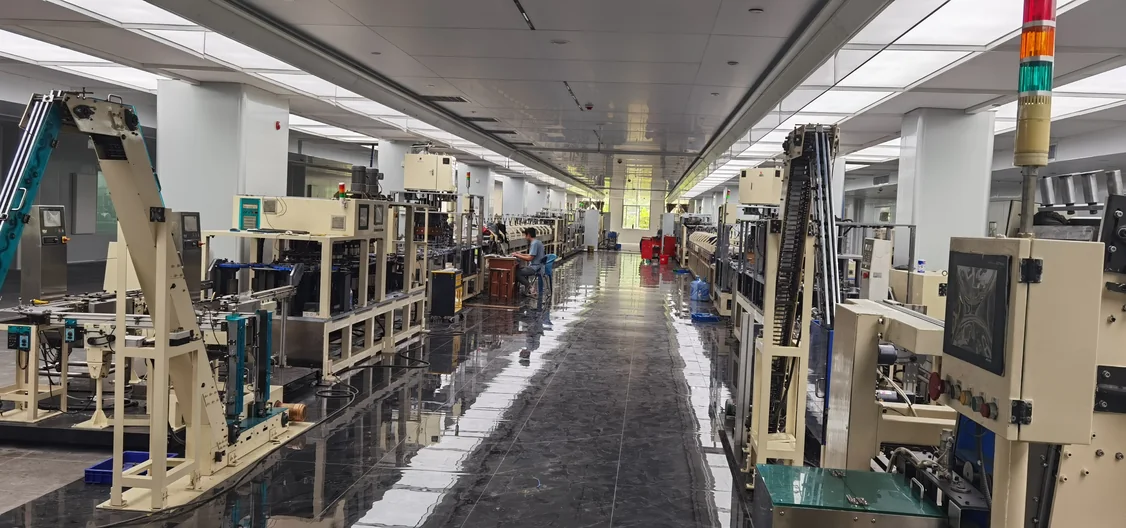
A large battery production line is transformed into a unified industrial product through integrated enclosures, continuous visual language, coordinated CMF and status lighting that communicates machine conditions at a distance.
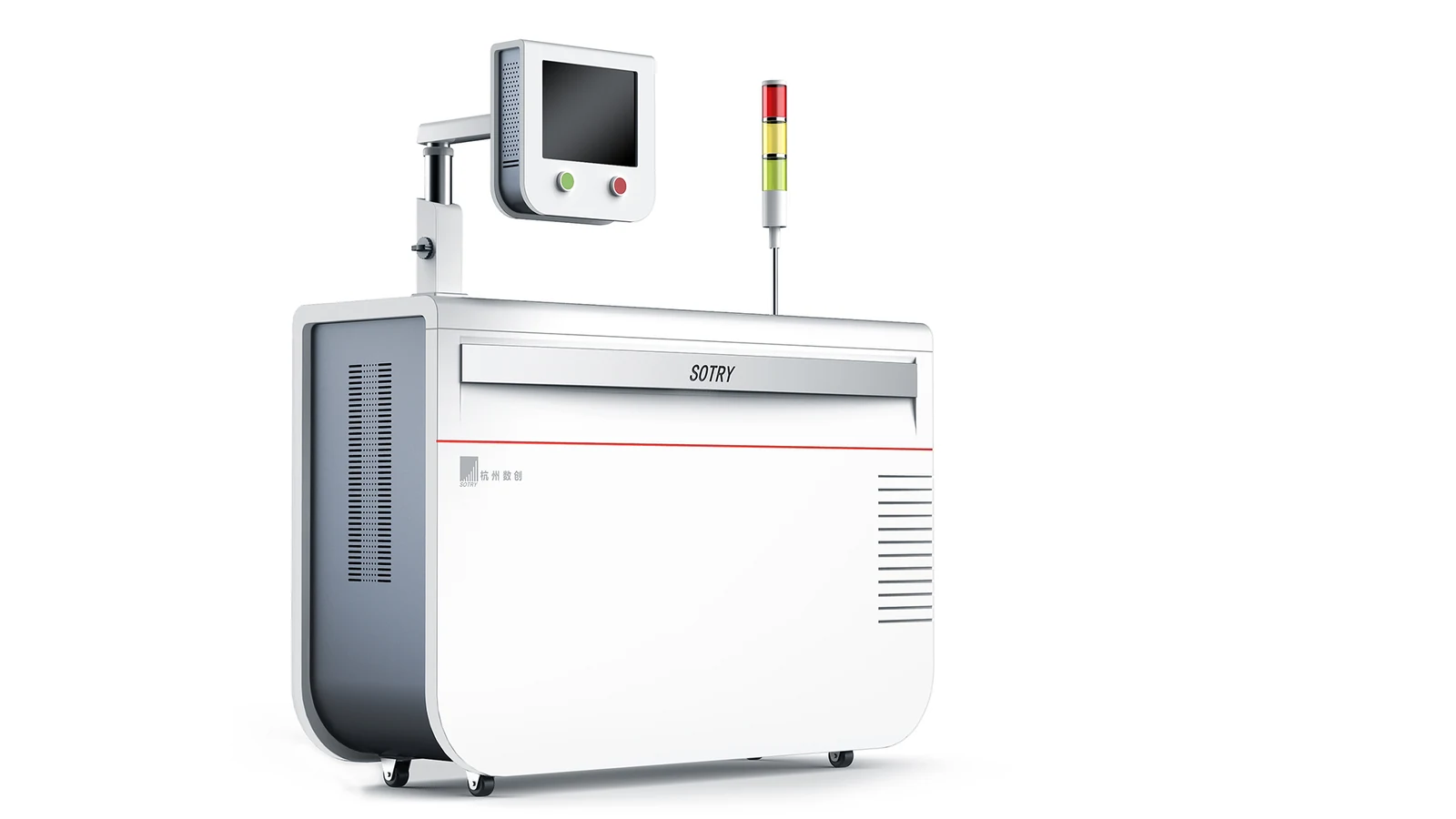
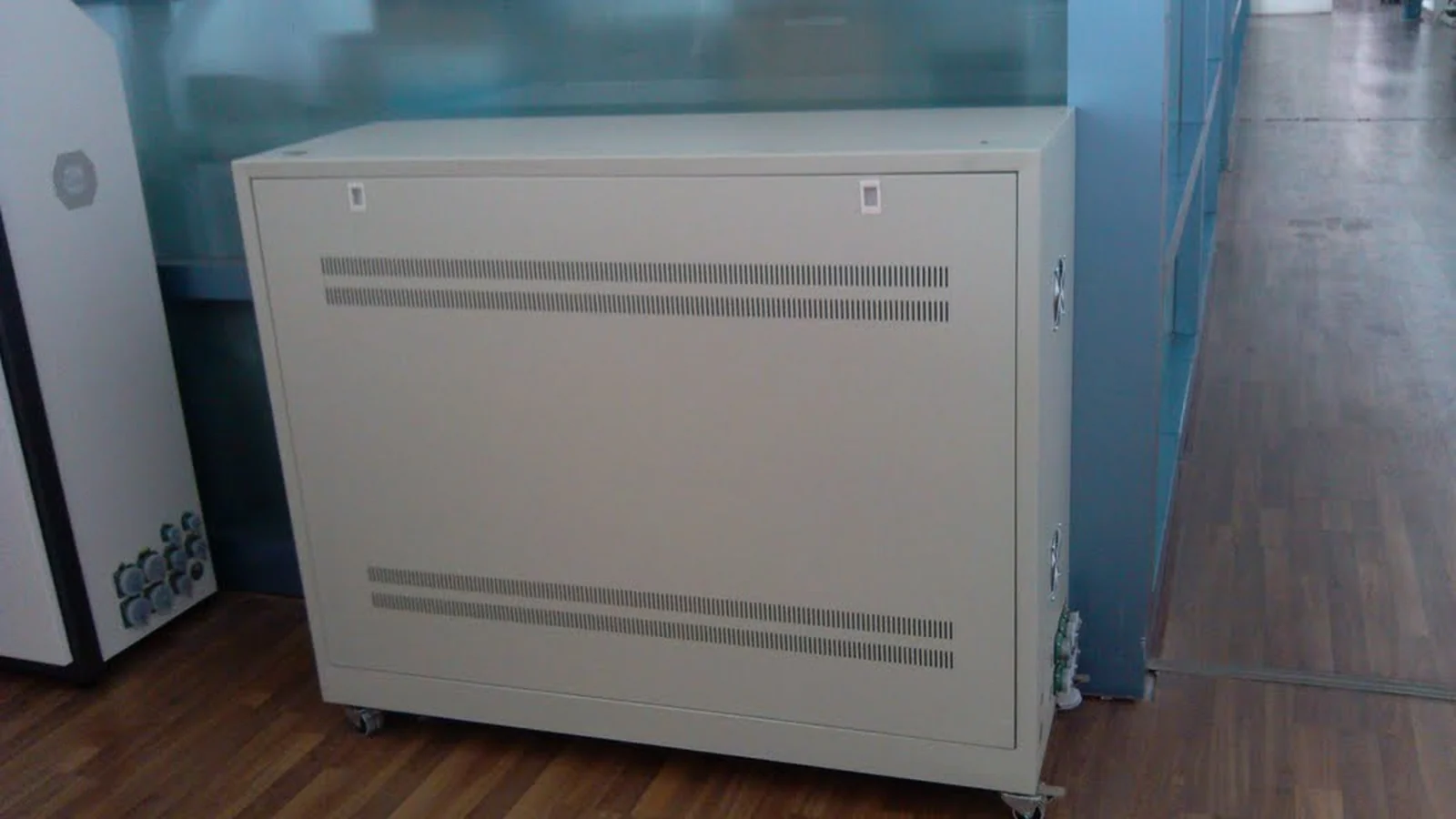
A conventional production-line control cabinet is redesigned with a clearer operator interface, integrated ventilation zones and a more coherent industrial product language.