CASE STUDY
Exterior design for a PCB depaneler at an electronics technology company: yellowed covers and a film-wrapped window replaced by all-white large-radius enclosures, a dark glass observation cabinet, one orange horizontal identity line, and a three-color signal tower. Sheet-metal enclosure design read in four steps — far, near, zero, behind.
In an electronics manufacturing workshop, the PCB depaneler is the gate where panels become boards: a full panel of routed circuits comes in, gets milled and separated, and leaves as individual boards ready for placement. The client's previous machine had served the workshop for years — yellowed covers, a window wrapped in protective film. Reliable in function, its image was stuck at "good enough to work." This exterior design project, for an electronics technology company, was a complete reset: to put reliability inside a machine that also looks reliable.
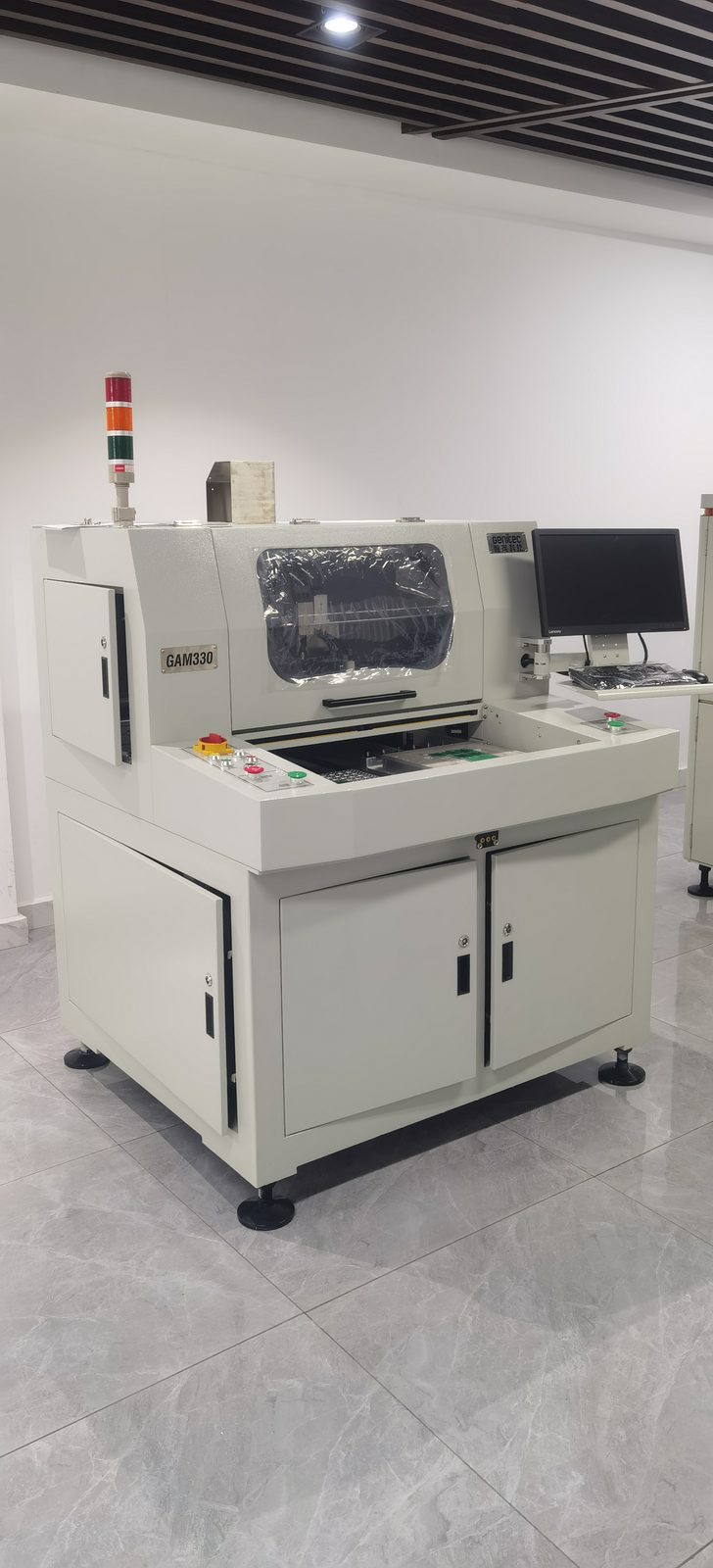
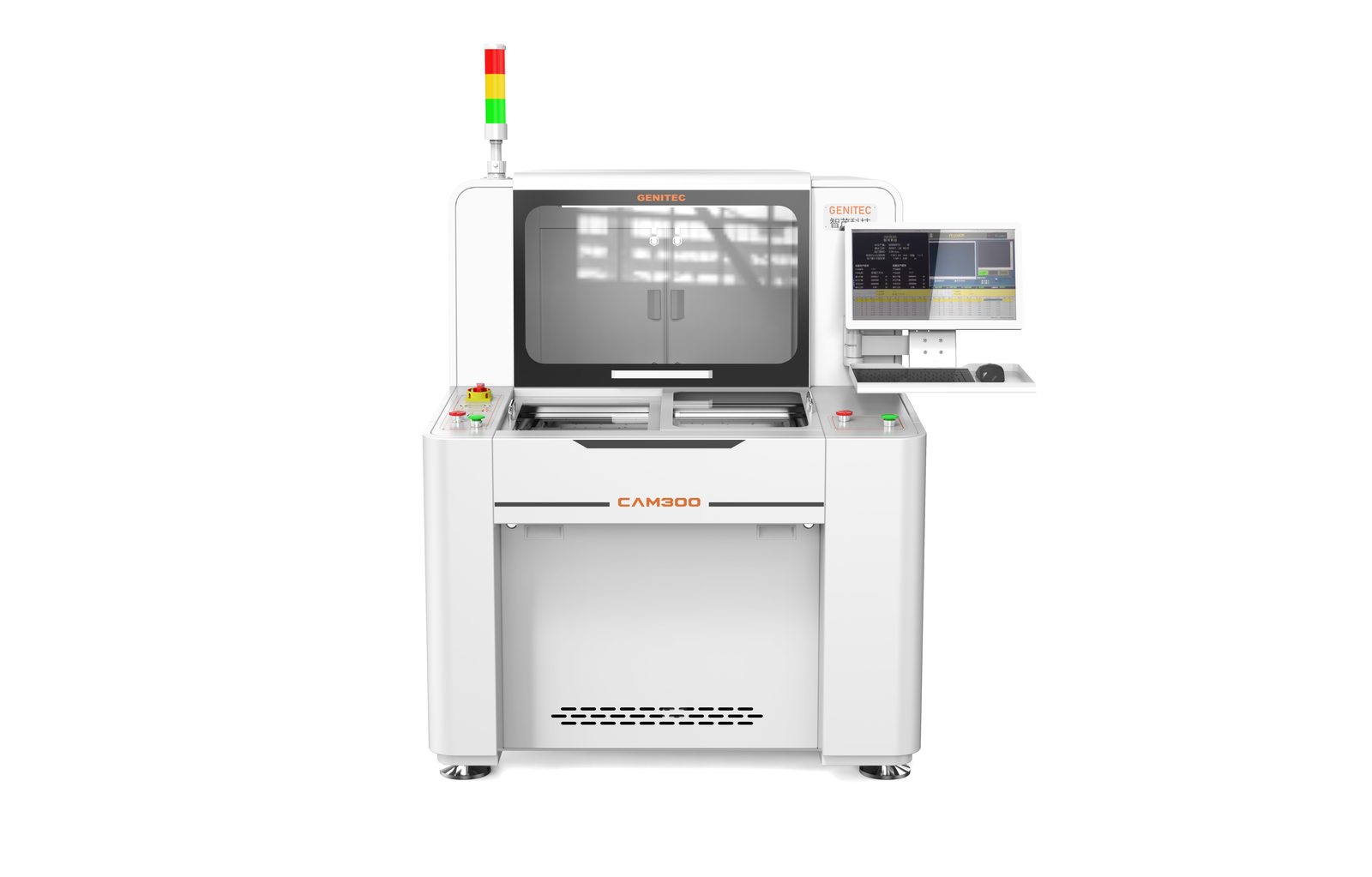
The answer is an all-white machine: large-radius covers wrap the whole body, a dark-framed glass observation cabinet sits front and center, an orange horizontal line draws out the operating zone, and a three-color signal tower stands at the top. The way to read this machine comes in four steps: far, near, zero, behind.
From across the workshop aisle, the machine first gives you a clean face: white large-radius covers fill the field of view, few seams, clear boundaries; the dark glass observation cabinet sits in the upper center like a black viewfinder, hanging "cutting is happening" on the machine's front; an orange horizontal line runs across the front edge of the operating table, continuing into the orange model mark. Recognition from afar relies on exactly three things: the white volume, the dark window, the position of one orange line. The three-color tower stands at the highest point, handing the machine's status to the sightline of the whole workshop.
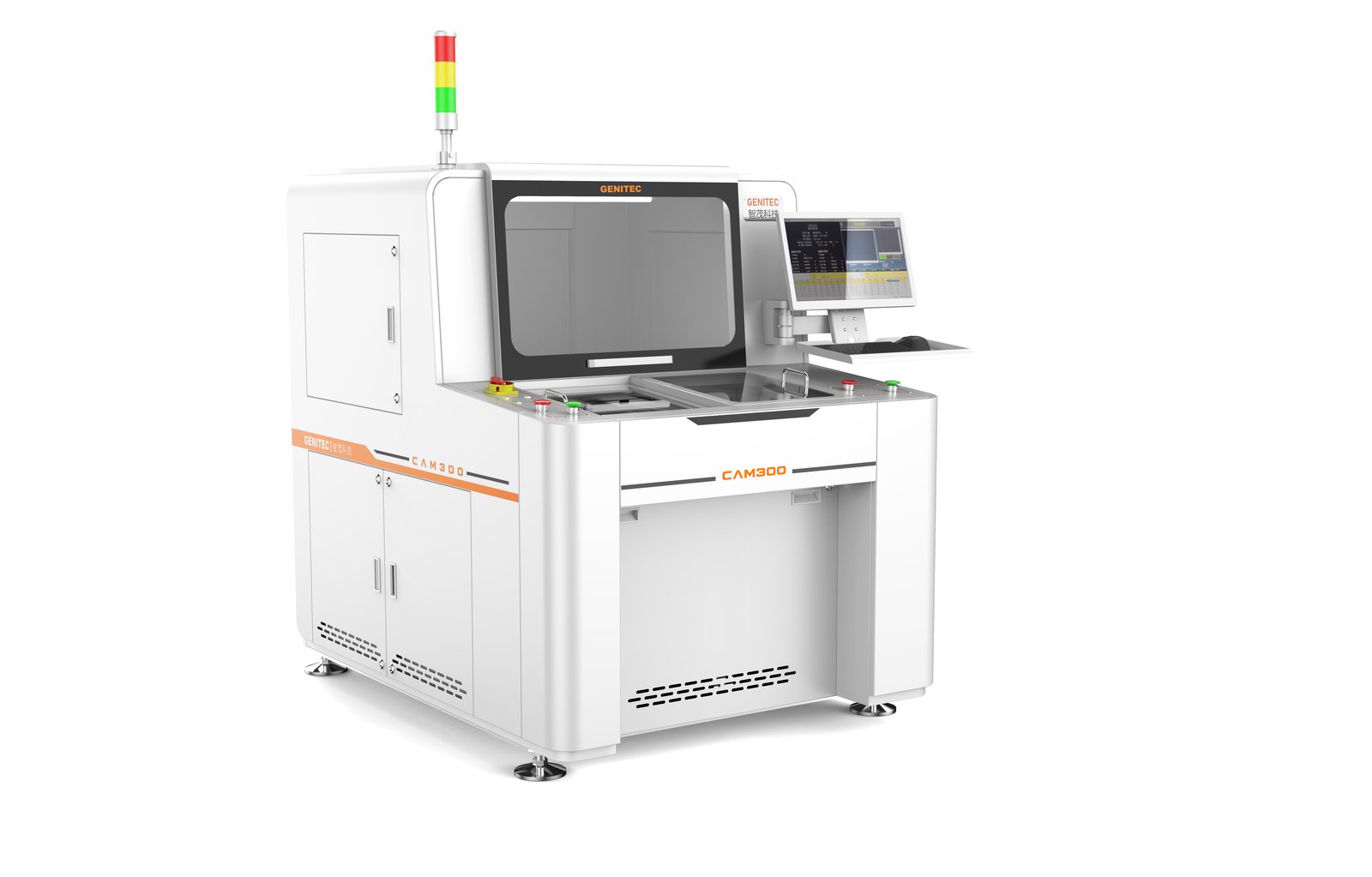
Up close, the rounded corners of the white covers are the most rewarding part: corner radii are unified, four elevations gathered by one set of curves; seams follow only the routes function requires — the frame of the observation cabinet, the perimeter of each service door, the boundary of each vent array — every seam aligns with a functional part. An articulated monitor reaches out from the side cover, its screen angle adjustable; green, red and yellow buttons line up along the operating table edge, each in its place. Quality up close is exactly this discipline: no extra seams, no casual holes.
At the operating position, the zero-distance test begins: loading, positioning, closing the window, pressing start — every action stays within one arm's reach of the front operating table; the glass cabinet opens as a pair of doors, LED lighting fills the chamber, and the milling cutter's path and the board's separation stay fully visible without leaning in for an angle. Service doors on the side open outward, putting tool changes, debris clearing and wiring in plain sight. Zero-distance interaction was never about how large the screen is — it is about how short the design keeps the distance between hand and eye.
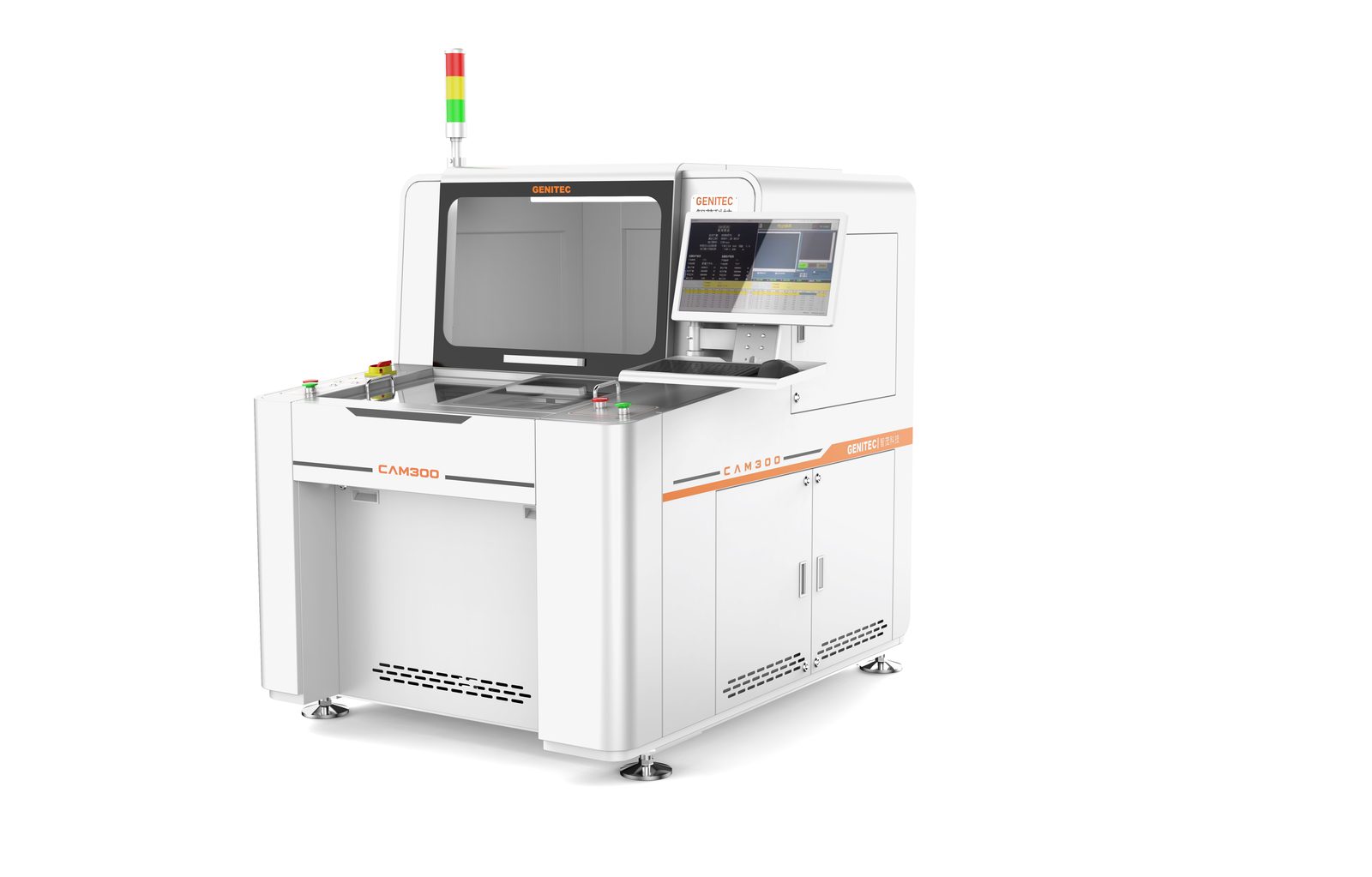
The functional order of this machine is written not only on its face but into its sheet-metal parts, and that order must be cashed in by manufacturing: springback control of the large flat covers, seam tolerance where two panels meet at a radius, the flatness of the observation cabinet frame, the continuity of the orange line across elevation breaks — plus door swing angles and cabinet layouts that leave room for maintenance three to five years out. Exterior design is not makeup for a machine; it is the road left open for every future service visit.

Exterior design for a laundry feeder: a chamfered top profile and white-blue formal language build line-level recognition, transparent guards and three workstation panels let the work zone explain itself, and systemic consistency carries quality across several meters of body.
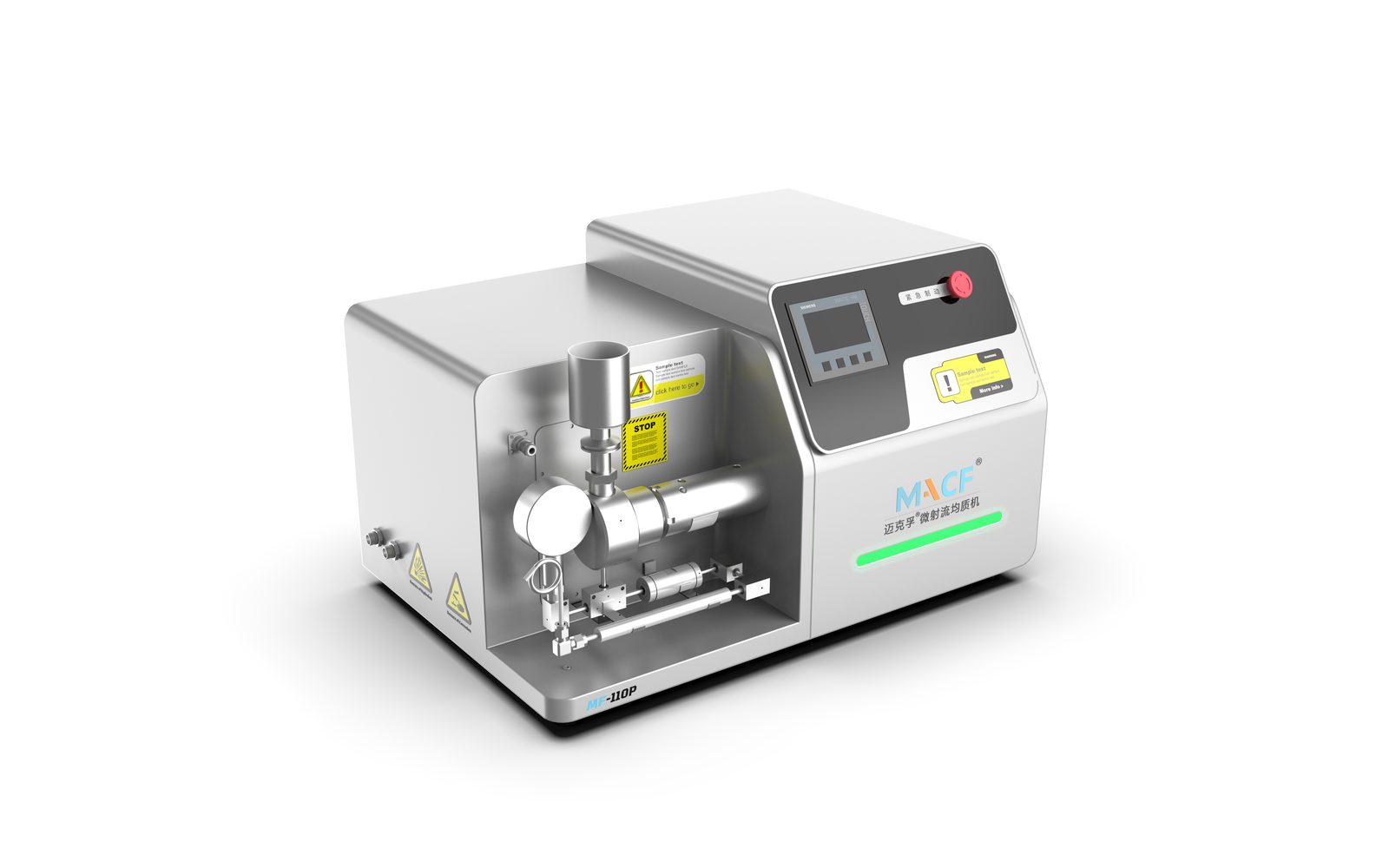
Exterior design for a benchtop microjet homogenizer: the enclosure language is reasoned backward from sheet-metal constraints, a silver-white body and black control deck form a two-volume order, and a single green line marks the operating side — a clean, restrained image that holds up up close.
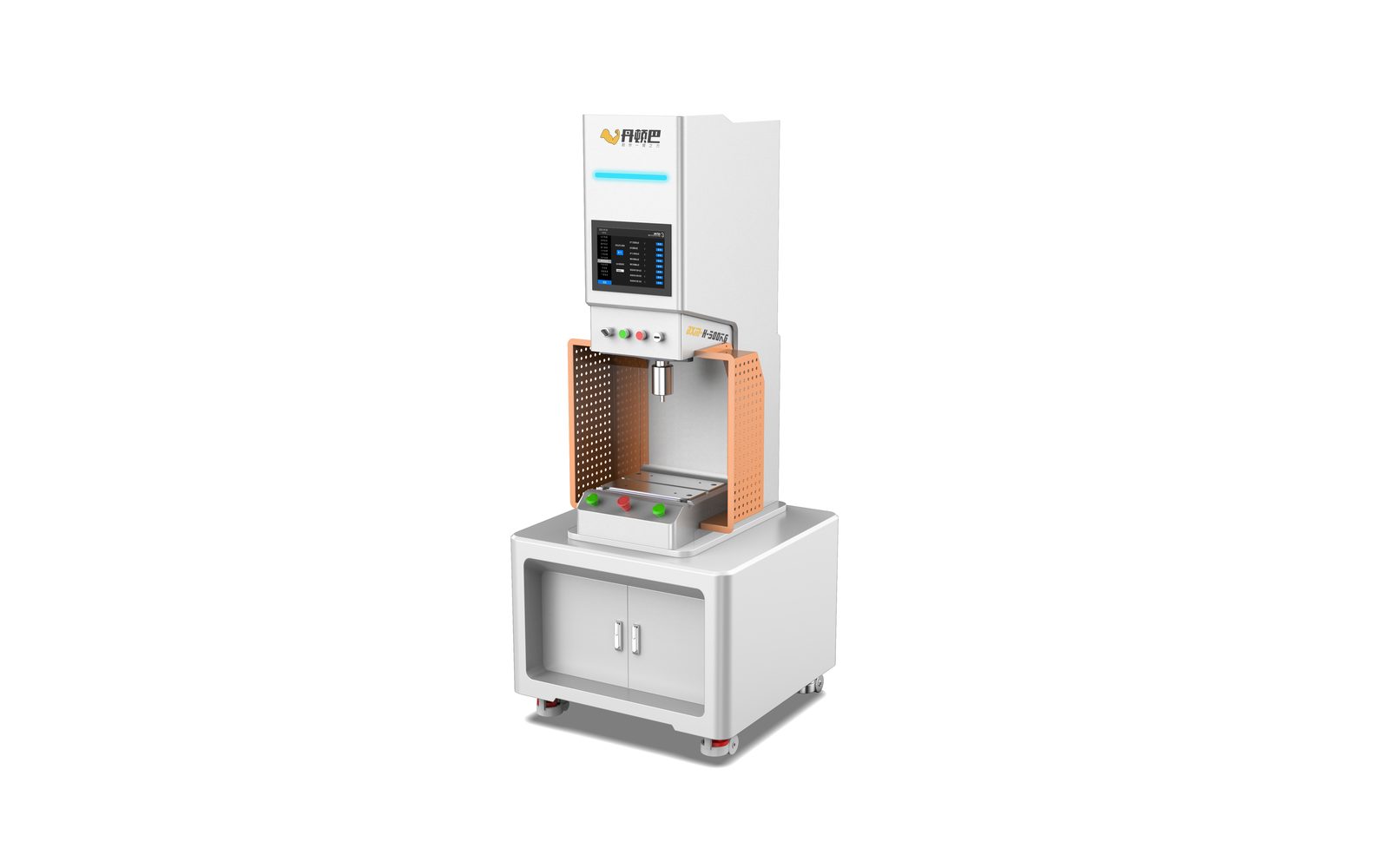
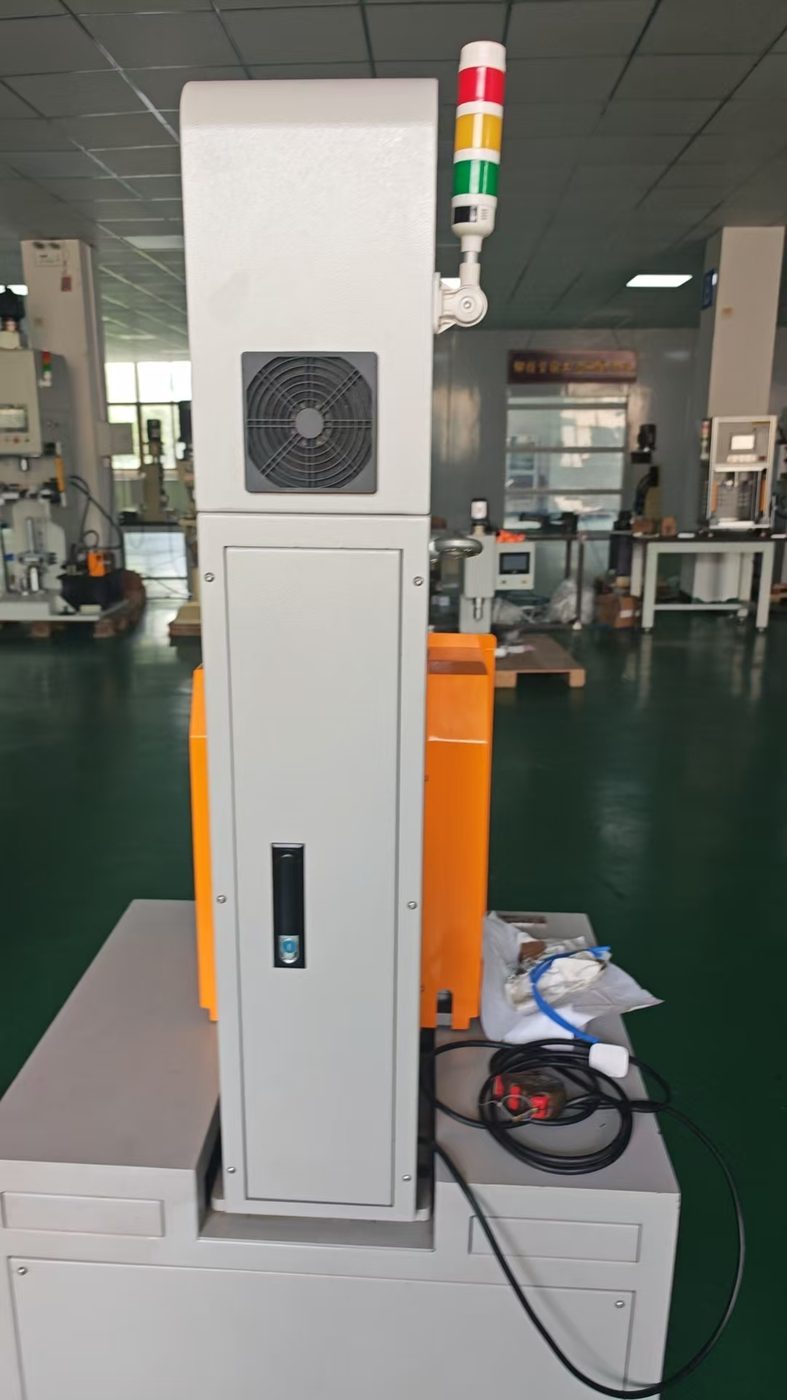
Exterior design for a benchtop servo press: a C-shaped arch body folded in sheet metal strengthens the pressing-machine silhouette, a cyan light band set into the seam states machine status, and orange perforated guards turn the safety zone into a visual part — certainty made visible.
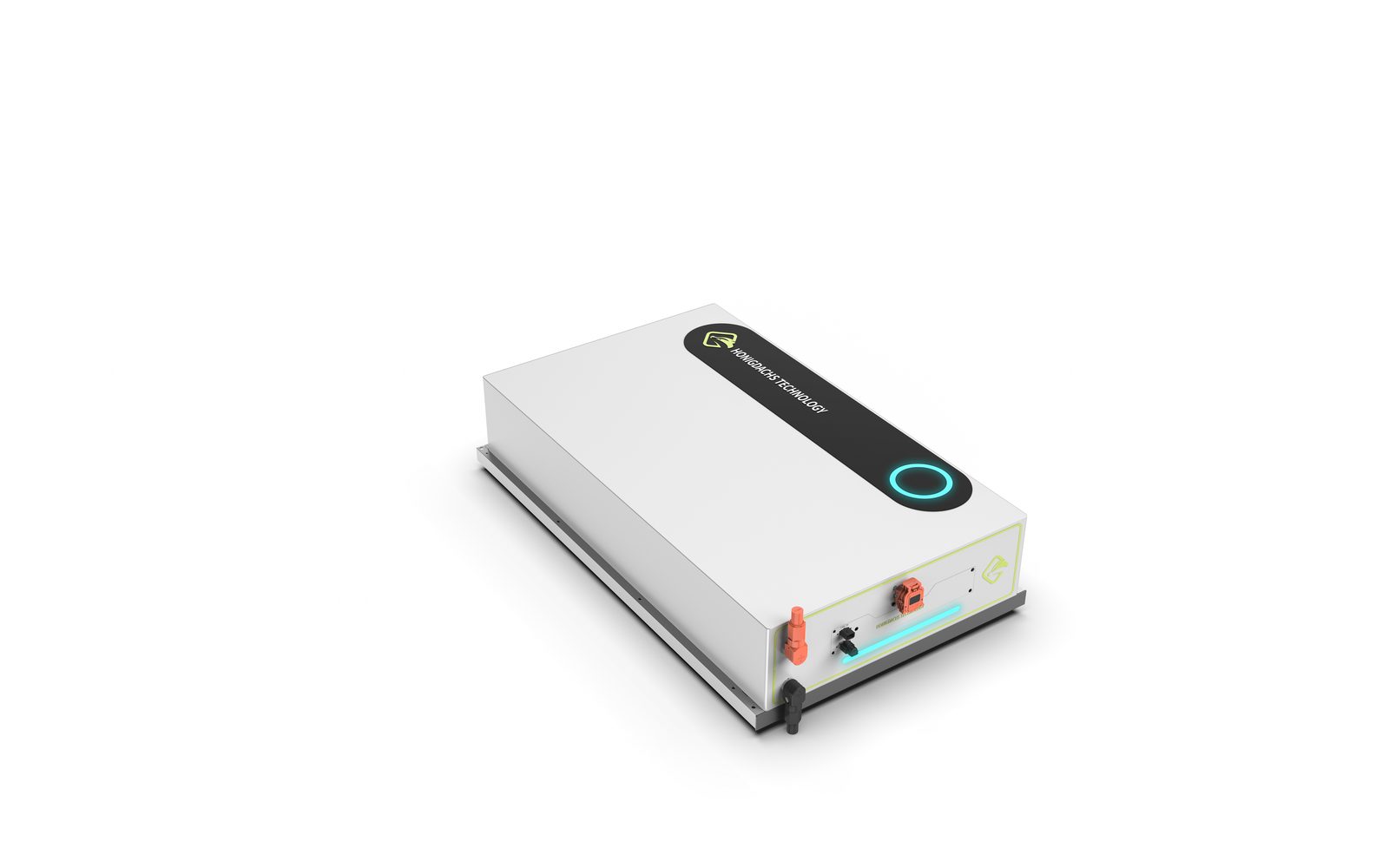
Exterior design for a battery module: a low flat volume with a slide-rail base serves the stacking logic, a black top plate with a cyan ring status light anchors brand recognition across the array, and the interface face separates high-voltage warning, status and maintenance zones with a clear color order.