CASE STUDY
Exterior design for a benchtop servo press: a C-shaped arch body folded in sheet metal strengthens the pressing-machine silhouette, a cyan light band set into the seam states machine status, and orange perforated guards turn the safety zone into a visual part — certainty made visible.
A servo press is a machine that sells certainty: pressing force, displacement and speed must all be recorded and traceable, curve by curve. Since the machine's job is certainty, its exterior should have nothing vague about it either — for this benchtop servo press, the exterior design puts certainty into three details.
This servo press, built for an automation technology company, serves precision pressing processes. Before the redesign, the enclosure read as a generic cabinet: a tall thin column with an exposed body — an image that did not match the machine's precision.

The most recognizable feature of a pressing machine is its C-shaped arch opening — workpieces enter here, and the press head descends vertically above it. The design keeps and strengthens this silhouette: the arch body is wrapped in one piece of folded sheet metal, a full arc running unbroken from the top head frame down to the base; a uniform flange pressed along the opening's edge states clearly: this is the working opening. From afar, the outline reads as what a press should be — no nameplate needed; customers recognize the category at a glance.

A cyan light band is set into the front of the head frame, exactly where the seam between arch body and head frame falls: when the band lights up, the machine is working; the joint between the two sheet-metal panels is neatly expressed by this line of light. Up close, the quality of this machine hides in that line — an even seam is the joint result of folding and assembly accuracy; a glowing band is an honest statement of machine state. One line communicates both quality and status.
The two sides of the arch opening carry orange perforated guards. Perforated sheet keeps observation and ventilation open, while orange delivers a highly recognizable safety cue — a safety zone should not be hidden; it should be seen at once. The hole pattern is arranged regularly, forming the only warm contrast against the silver-grey body, so that "this is the moving zone" becomes the easiest information to read on the whole machine. The enclosure practices subtraction here: it does not hide the process — it draws the boundary.

The black touchscreen panel sits in the front of the head frame, echoing the cyan band above; operating buttons cluster at the front of the press head, at a height both hands reach naturally. Pressing parameters display in real time; start, e-stop and mode switching need no searching — at zero distance, every interaction falls where the eye and the hand naturally land. A machine's courtesy to its user is this: no manual needed to know how to use it.
Three details told, back to the machine's job: certainty. The arch silhouette makes recognition certain; the light band and seam make quality certain; the orange guards make safety certain. The certainty a customer sees and the certainty the pressing curves record are, in the end, the same thing — and industrial credit is built one machine at a time.

Exterior design for a laundry feeder: a chamfered top profile and white-blue formal language build line-level recognition, transparent guards and three workstation panels let the work zone explain itself, and systemic consistency carries quality across several meters of body.

Exterior design for a benchtop microjet homogenizer: the enclosure language is reasoned backward from sheet-metal constraints, a silver-white body and black control deck form a two-volume order, and a single green line marks the operating side — a clean, restrained image that holds up up close.
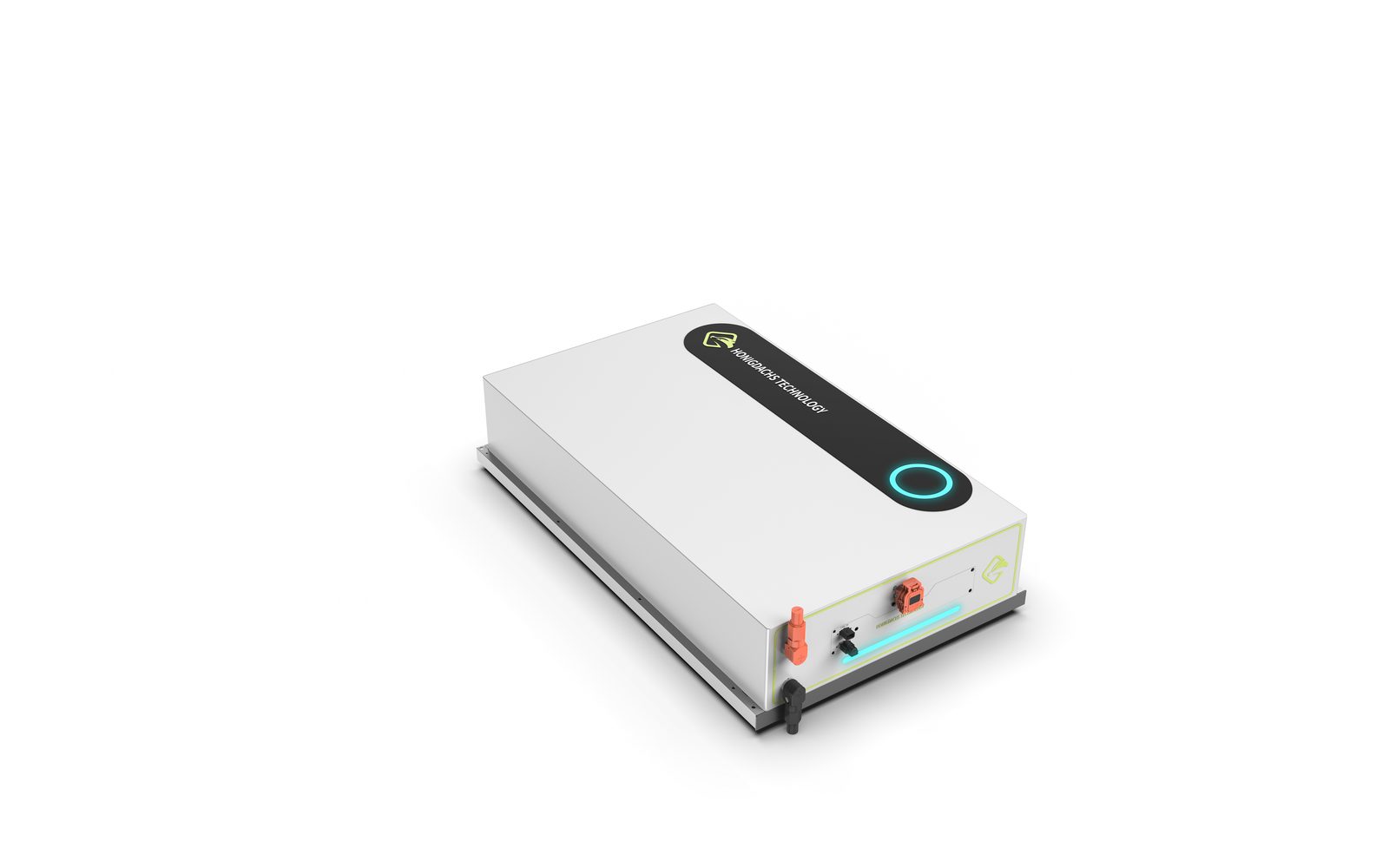
Exterior design for a battery module: a low flat volume with a slide-rail base serves the stacking logic, a black top plate with a cyan ring status light anchors brand recognition across the array, and the interface face separates high-voltage warning, status and maintenance zones with a clear color order.