CASE STUDY
EQPID transformed a hot press forming machine from an exposed engineering assembly into a more integrated industrial product. By reorganizing the enclosure architecture, operator interface, viewing areas, and CMF, the redesign creates a clearer functional hierarchy and a more complete professional equipment identity.
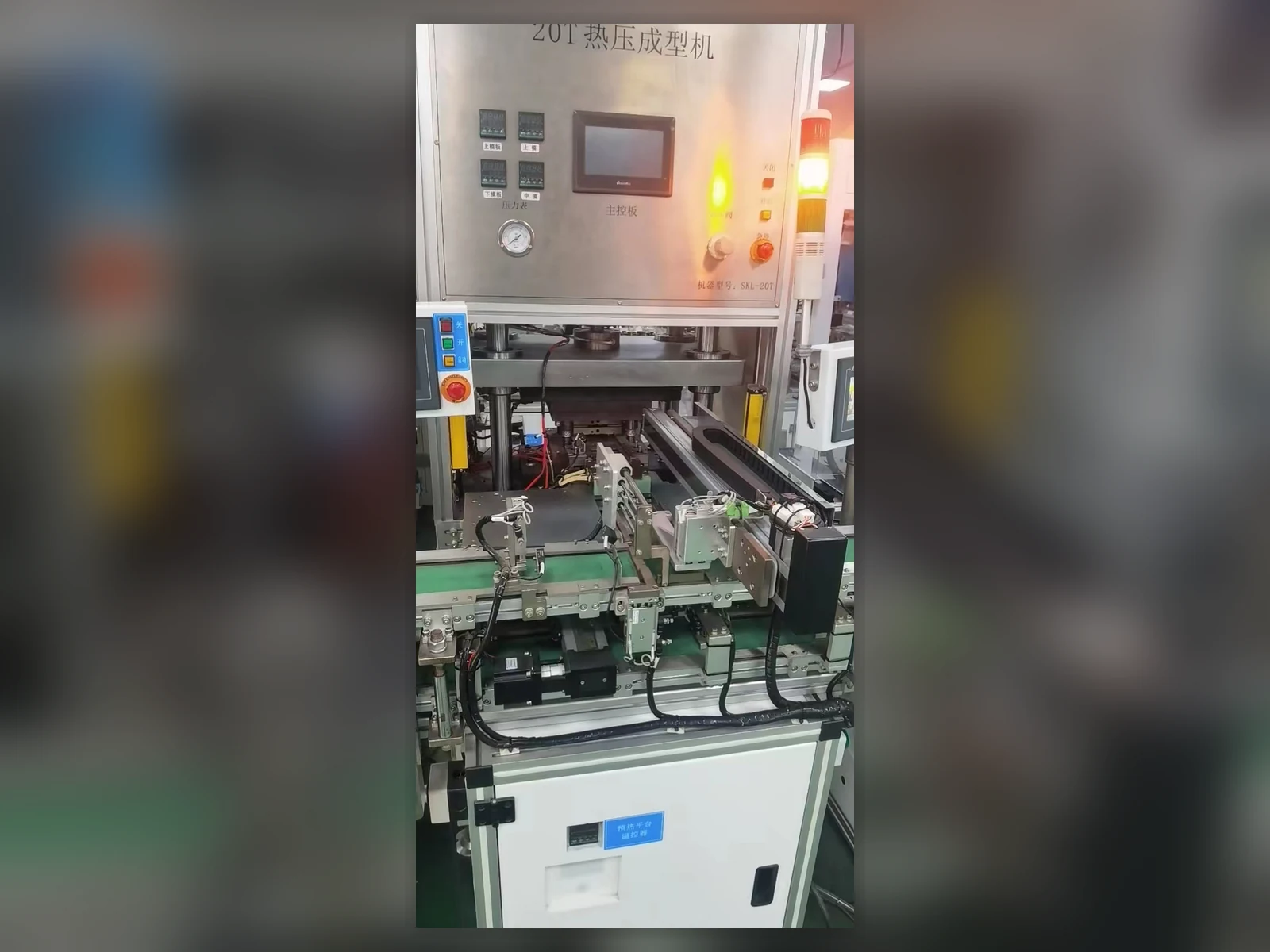
The original machine was visually defined by aluminum framing, exposed mechanisms, transfer components, control panels, and visible wiring.
Its engineering logic was easy to understand, but the individual functional and structural elements remained visually independent. The machine presented itself primarily as an engineered assembly rather than a fully developed industrial product.
The redesign went beyond simply adding an enclosure.
EQPID reorganized the relationship between control, observation, maintenance, transfer functions, and the machine body, bringing them into one coherent product architecture.
A more integrated enclosure, centralized front interface, consistent viewing-window language, and unified CMF system establish a clearer visual order around the existing engineering structure.
The result is a machine that reads first as a complete industrial product rather than as a collection of individual engineering components.
The central challenge was to improve product integration without compromising the machine’s real functional relationships.
The original equipment exposed a large number of mechanical structures, pneumatic and electrical components, cables, transfer mechanisms, and aluminum profiles. These elements clearly communicated how the machine worked, but together they created a highly fragmented visual composition.
The machine also has a tall and narrow proportion. Its front face needs to accommodate the operator interface, process observation, machine-status information, and brand expression, while side-mounted transfer and service areas remain directly connected to the working process.
The design therefore required a clear decision about what should be enclosed, what should remain visible, what should be directly accessible, and which engineering relationships should continue to remain visually legible.
Before the redesign, the equipment was visually dominated by aluminum framing, mechanical structures, control components, pneumatic and electrical systems, wiring, and transfer mechanisms.
Each module clearly served its engineering purpose, but there was limited overall product hierarchy.
The first impression was primarily about what the machine was made of.
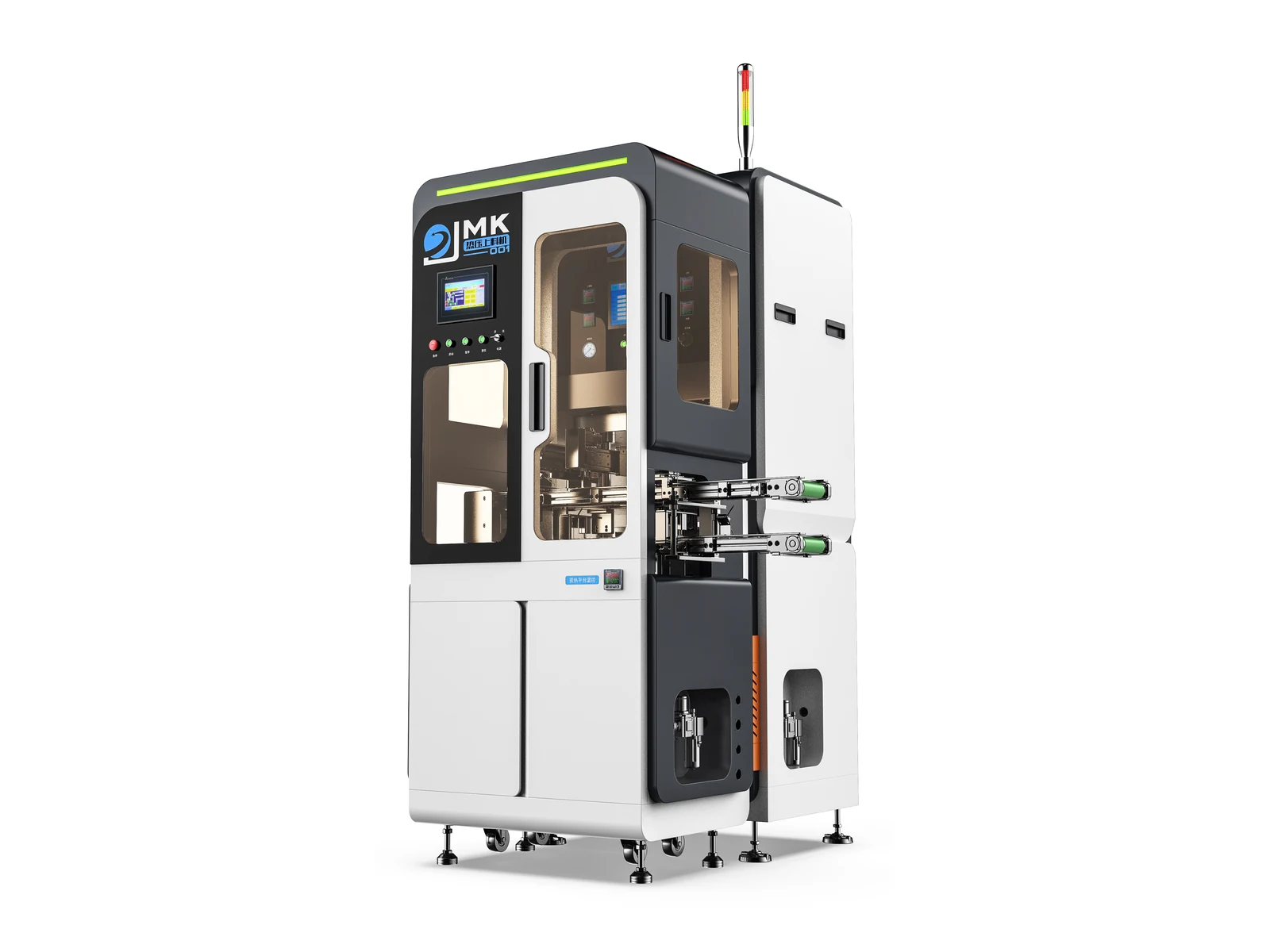
The redesign reduces the visual dominance of exposed framing and individual engineering components by establishing a more complete sheet-metal enclosure around the machine.
Rather than allowing each mechanical module to define its own visual identity, the equipment is organized within one overall product boundary.
This shifts the machine from a collection of engineering structures toward a coherent product architecture.
A dark front section becomes the primary visual and operational focus of the machine.
The HMI, physical controls, brand information, and viewing areas are organized within the same visual system, making the main operating face immediately identifiable.
The control interface therefore becomes part of the product architecture rather than appearing as an electrical component added independently to the machine.
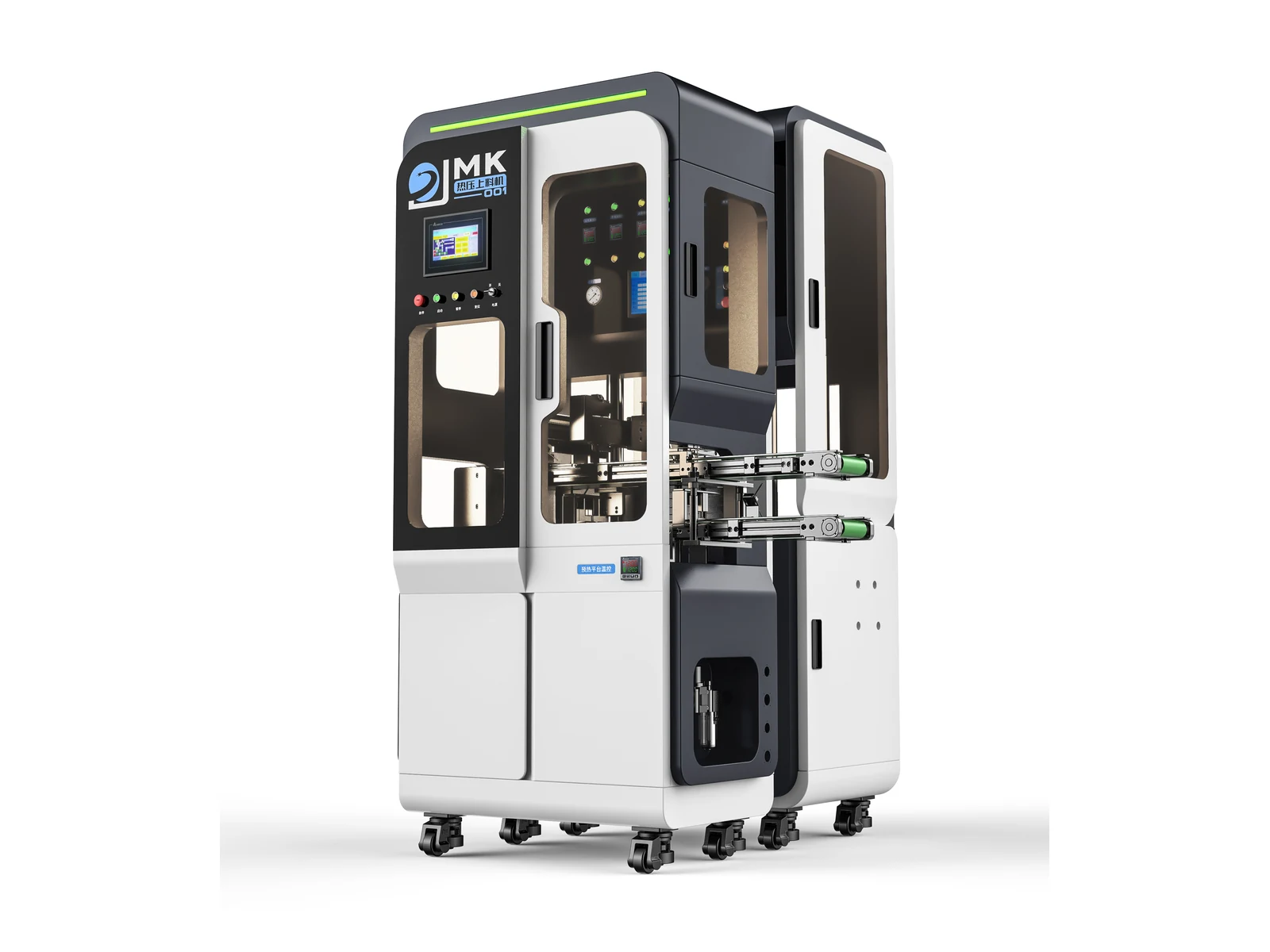
Large transparent viewing areas maintain a direct visual connection with the machine’s internal working process.
Instead of completely concealing the equipment behind an enclosure, the design uses consistent dark frames and window proportions to turn process visibility into part of the product language.
Transparent and solid areas have different roles: working zones that need to be observed remain visible, while engineering structures that do not need to dominate the exterior are integrated into the enclosure.
The primary CMF system combines a white main body, dark functional areas, and restrained green identifying details.
The white enclosure creates a clear overall product volume, while darker surfaces concentrate the operational and observation functions.
A slim green light feature near the upper front, together with the status tower, introduces a recognizable technical detail within an otherwise restrained industrial composition.
Product integration does not mean enclosing every engineering element.
Side viewing windows, access doors, and transfer mechanisms remain clearly related to the working process.
This allows the equipment to achieve a more complete product appearance while preserving an understandable relationship between operation, service, observation, and material movement.
The operator interface, observation areas, service access, and transfer zones are given a clearer visual hierarchy.
The HMI and physical controls are concentrated on the main operating face, large viewing windows correspond to internal working areas, and side access points support the equipment’s service relationships.
The exterior architecture therefore helps communicate how different parts of the machine are intended to be used.
Previously fragmented framing, mechanisms, control elements, and protection areas are reorganized into one consistent product language.
White, black, and dark gray establish a stable visual hierarchy, while continuous corner treatments, repeated window geometry, and larger sheet-metal surfaces reduce visual fragmentation.
The machine moves from an engineering-led appearance toward a more complete and recognizable industrial product identity.
The exterior is developed through clearly organized sheet-metal surfaces, access doors, viewing windows, panel divisions, and controlled corner geometry.
Rather than relying on excessive decorative parts, product quality is created through proportion, panel relationships, openings, and consistent detailing.
This creates a design language that supports downstream structural development, fabrication, and assembly while maintaining a strong product expression.
Good to Use · Good to Look At · Good to Manufacture
The redesign brings the enclosure, viewing windows, control area, access panels, brand information, and CMF into one coordinated product system.
Complex engineering structures are reorganized into clearer operational, observation, enclosure, and transfer zones.
The machine is perceived first as a complete industrial product, while its engineering relationships remain understandable within that overall architecture.
This is the core transformation of the project: from engineering structure to product system.
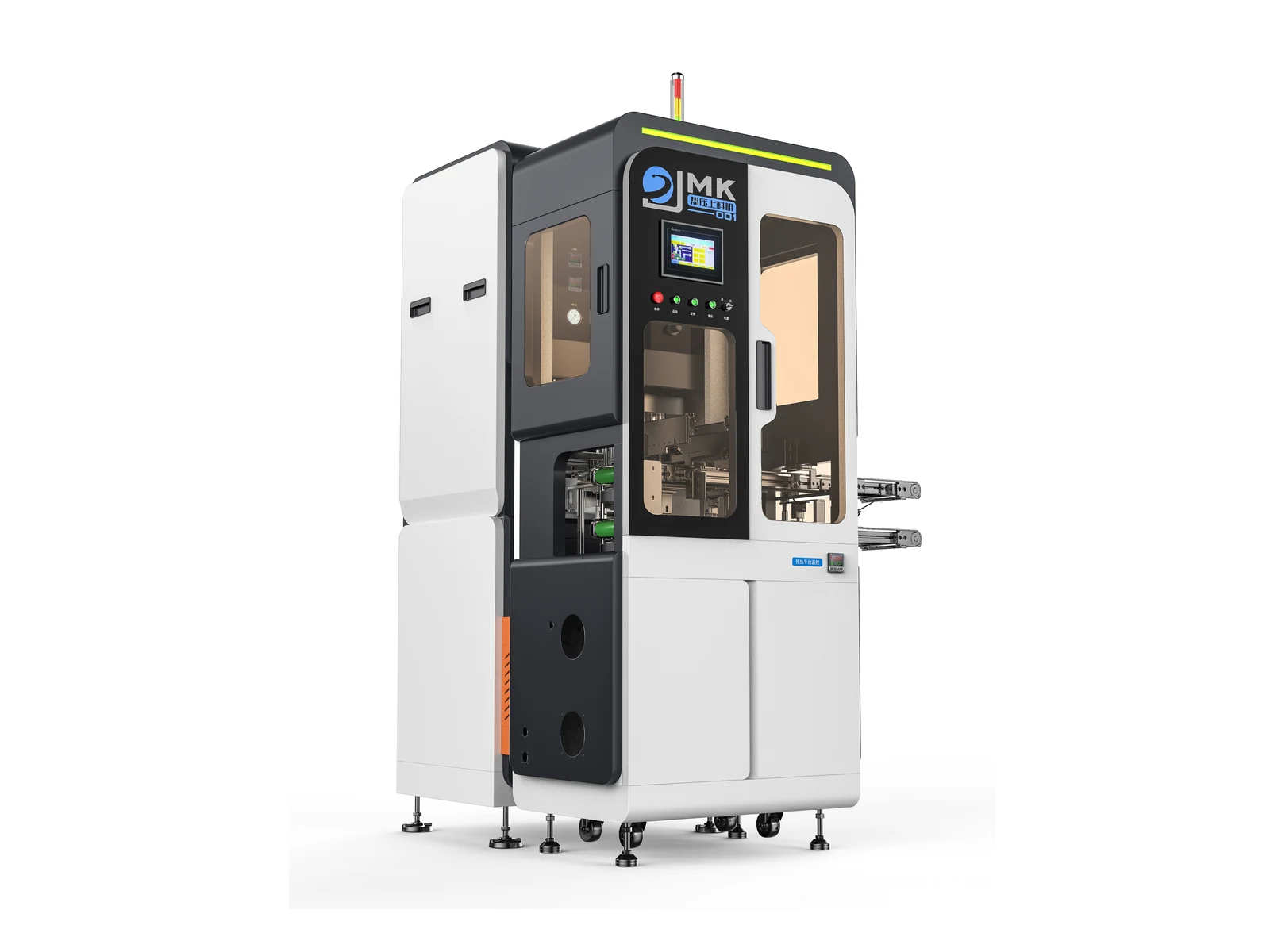
The redesign establishes a more coherent product architecture for the hot press forming machine.
Mechanical structures, controls, observation areas, and enclosure elements that previously appeared as separate engineering components are reorganized into a clearer overall form, stronger functional hierarchy, and more consistent visual language.
The resulting equipment communicates operation, observation, service access, and machine structure through a more complete industrial product expression.
For large industrial equipment, industrial design is not about hiding engineering complexity. It is about translating that complexity into a product that customers can more easily see, understand, and evaluate.
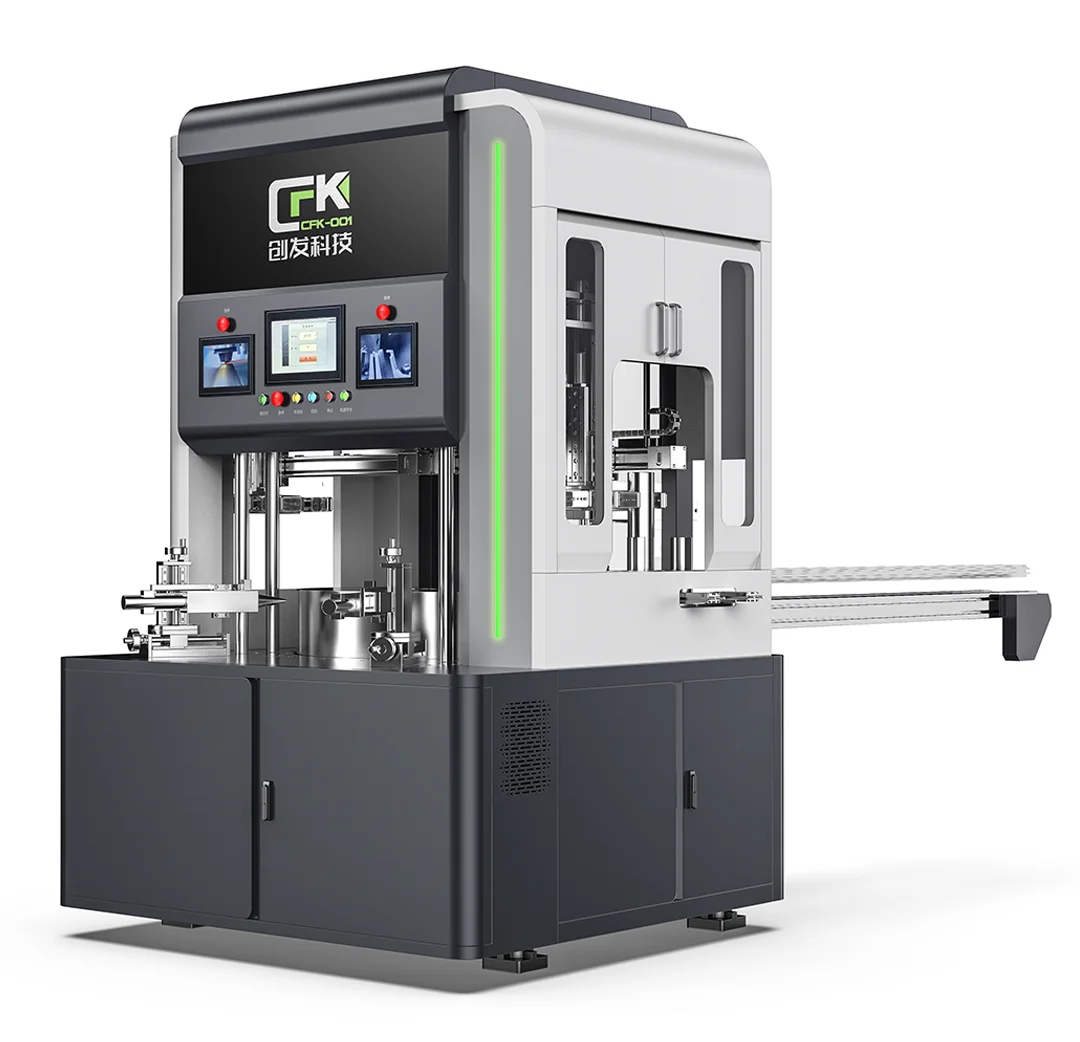
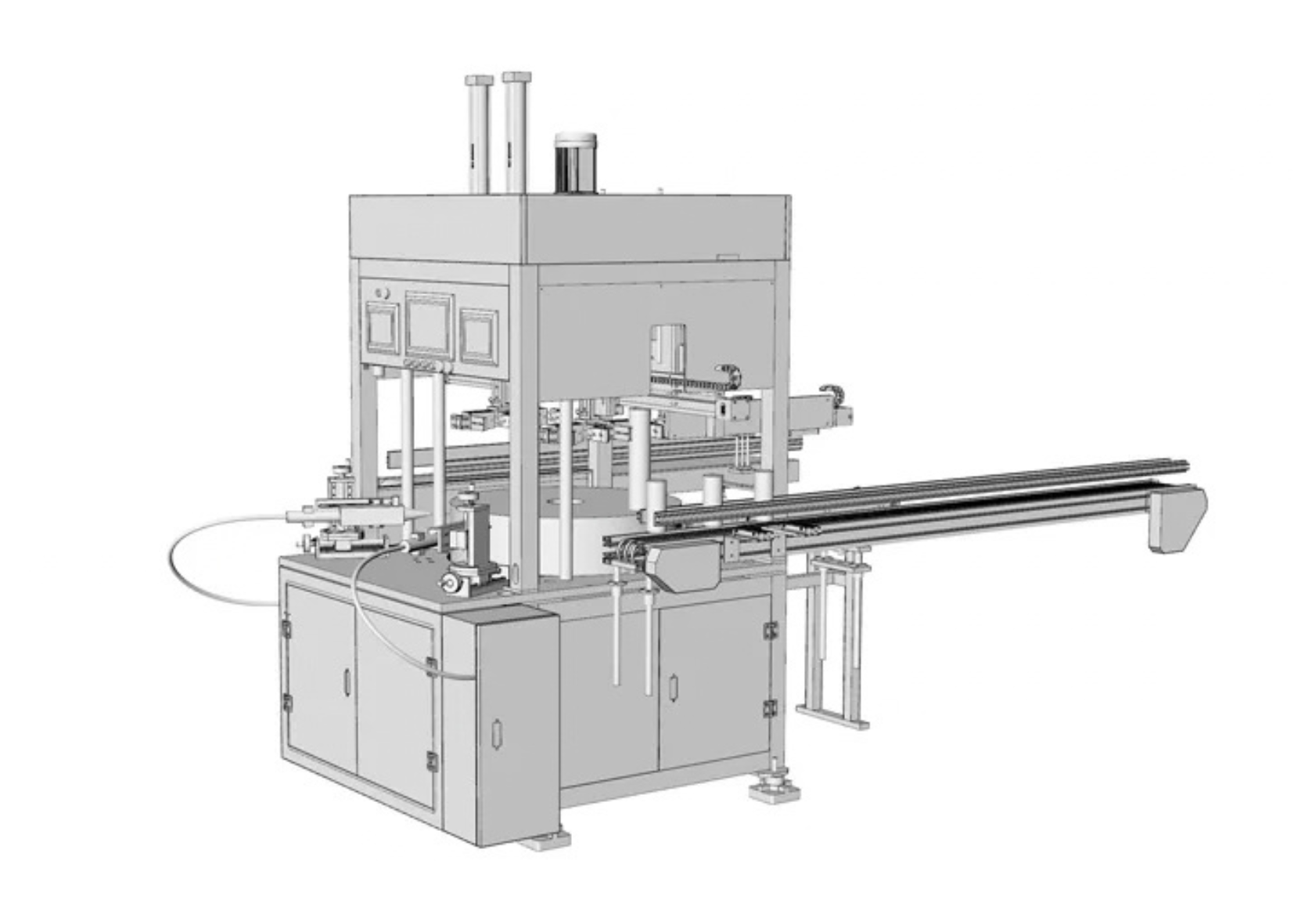
A vacuum flask welding machine gains clearer operating and maintenance zones through an integrated enclosure, concealed routing and a coordinated control area.
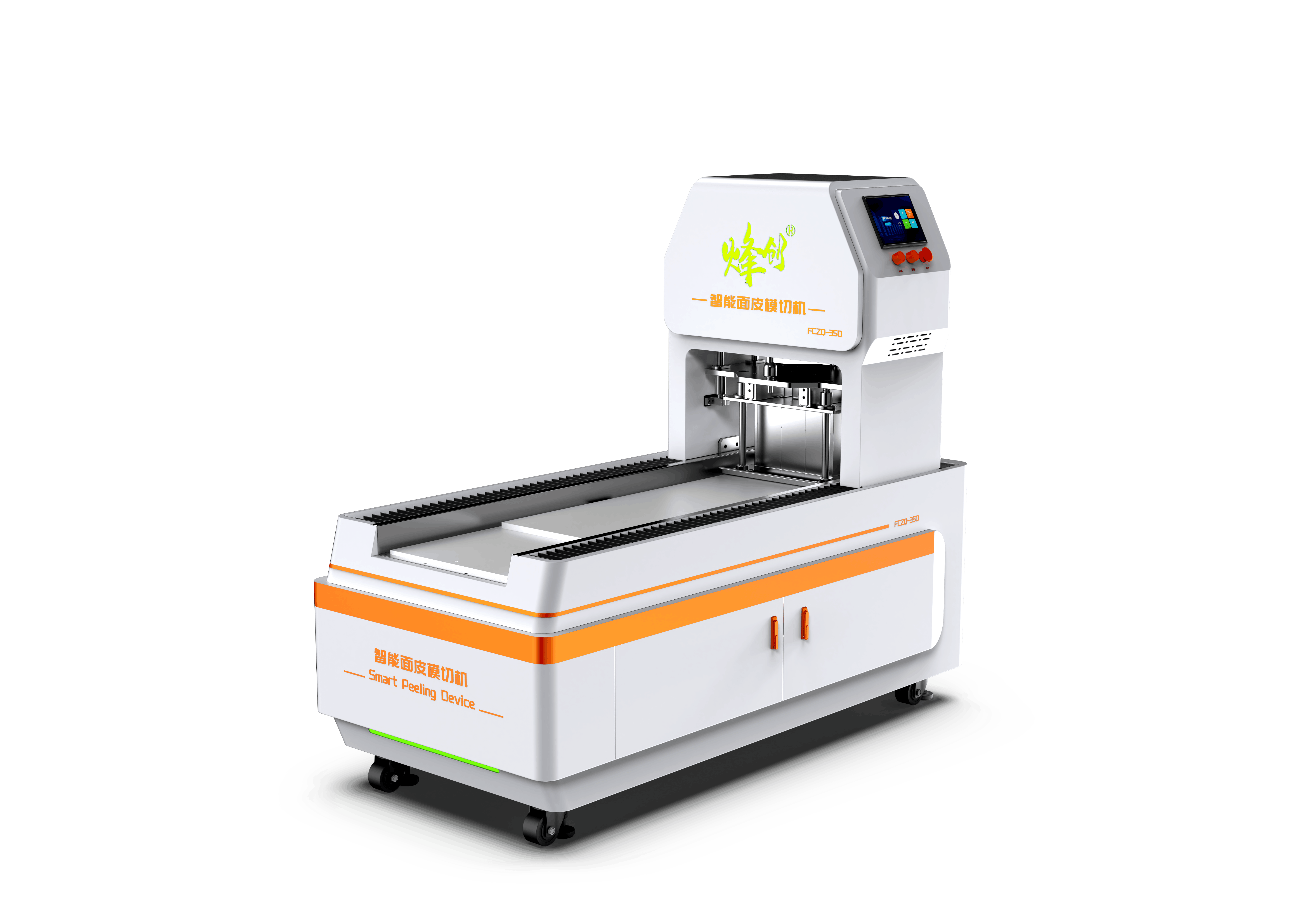
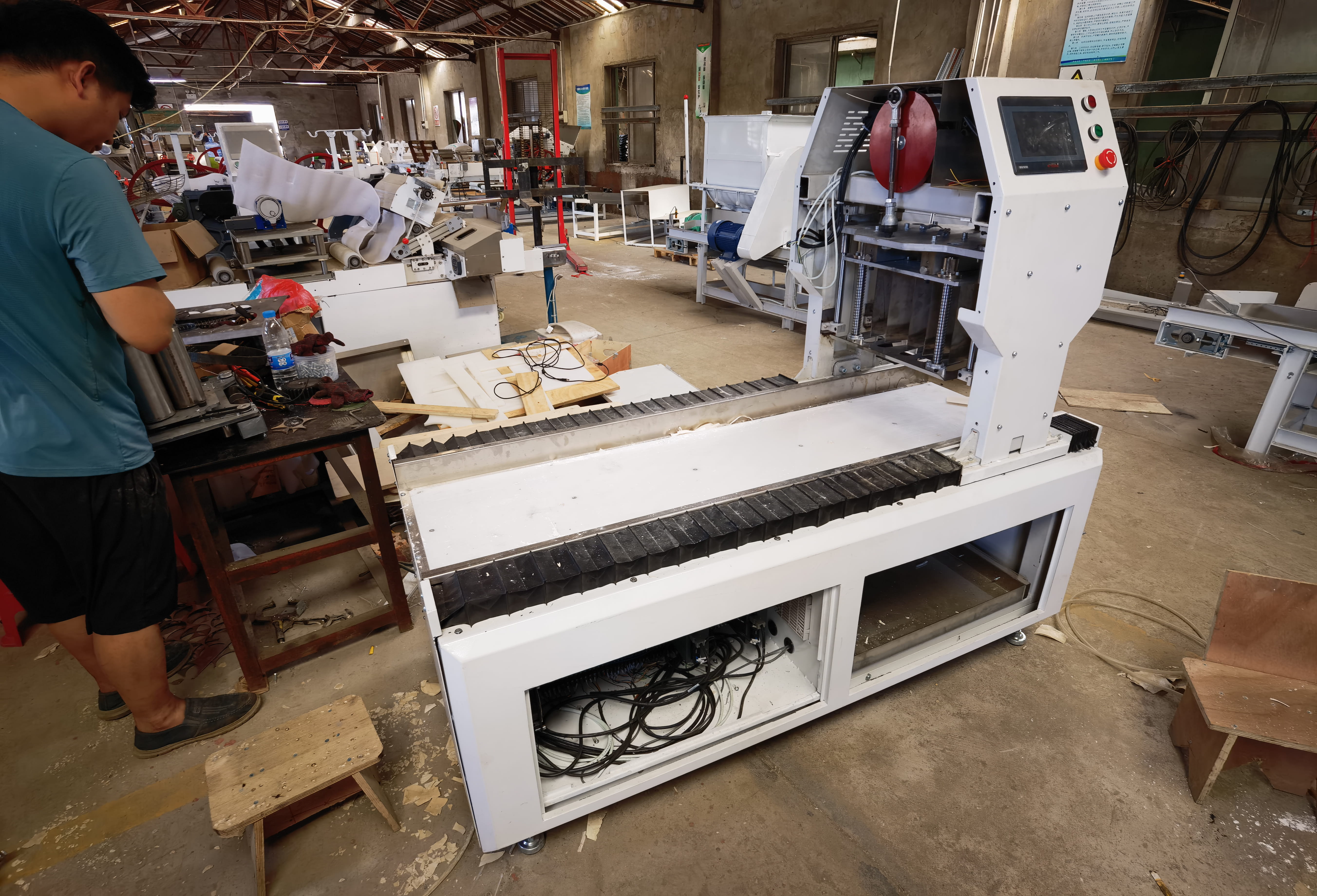
A Skin Stamping and Cutting Machine device redesigned to improve product identity, user experience, and manufacturing quality through systematic industrial design.