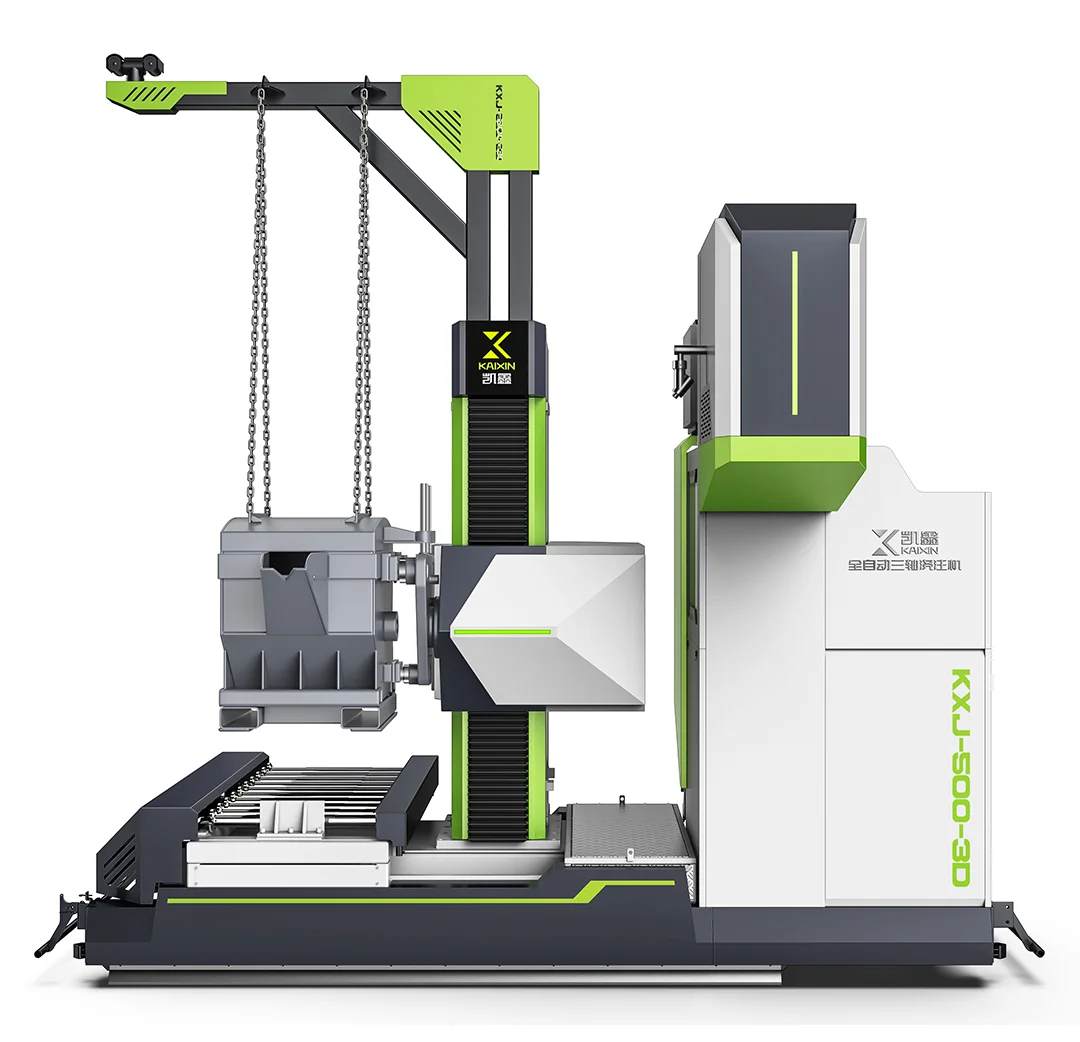
Current Status of the Original Equipment
The customer’s existing equipment primarily has the following issues:
1. The design lacks a sense of order and layering
The overall structure appears “cluttered”; the proportions of the various functional modules (hopper, control panel, base) are poorly balanced. The lines consist mainly of straight lines and abrupt angles, lacking smooth curved transitions. Visually, it appears bulky and rigid, lacking the clean, crisp aesthetic of modern industrial equipment.
2. The color scheme is chaotic and lacks aesthetic appeal
The combination of the main silver metal body and the yellow control panel is too jarring. The area and hue (bright yellow) of the yellow sections do not match the overall industrial silver tone, failing to reflect brand identity or provide guidance for functional zoning;
The design of the red vertical slogan (“Fully Automatic Casting Machine”) is overly literal and crude, disrupting the overall harmony of the appearance; it resembles a temporary sign rather than a design element.
3. Rough deailing and lack of texture
Details such as seams and screws on the equipment’s surface are highly visible, lacking concealed design or smooth transitions, which makes the craftsmanship appear less refined;
The edges and corners of components such as the hopper and base are mostly right angles, lacking the softness of rounded corners and failing to incorporate safety details typical of industrial design (though functionality takes priority, this results in a visually stiff appearance).
4. Lack of Brand Identity and Design Language
The exterior lacks unified design symbols (such as brand colors or iconic design elements), making it resemble an “assembly of functional parts” rather than a product with brand recognition; consequently, it struggles to convey a professional, high-end image visually.
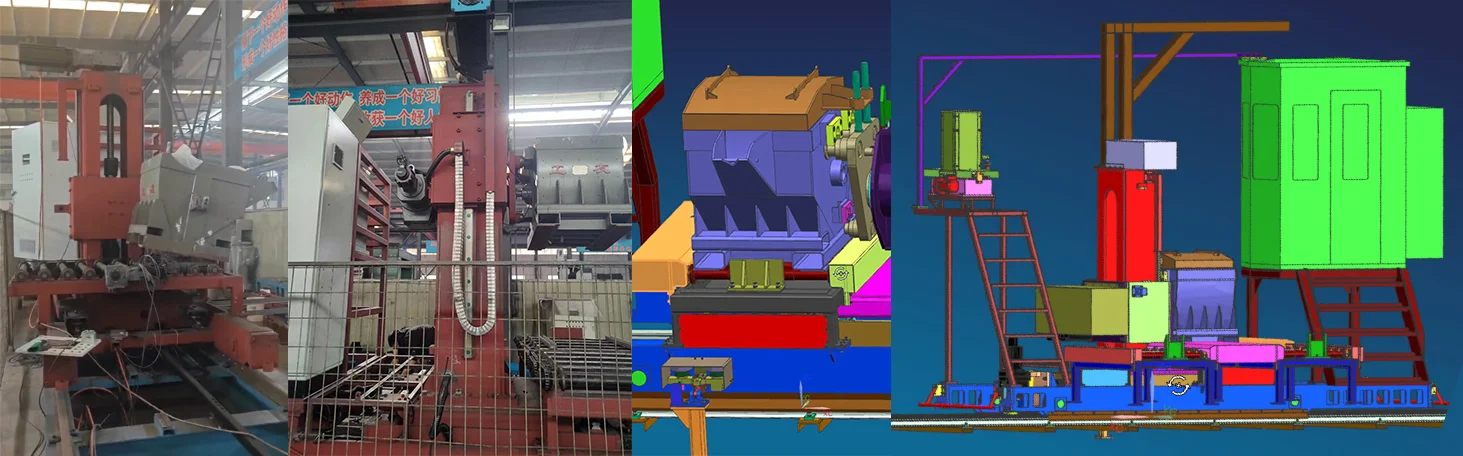
Technical Specifications:
Additive manufacturing reduced tooling production time by nearly 40%, allowing faster transitions from design to deployment. The lightweight and optimized tool designs improved handling and assembly efficiency while maintaining durability under demanding conditions. Cost savings were achieved through material reduction and rapid iteration, enabling the client to respond quickly to production changes and customization needs. The project demonstrated how additive manufacturing can revolutionize tooling by blending speed, flexibility, and precision.